How a B2B Chat Assistant Supports Multilingual Customer Conversations
Learn how a B2B chat assistant centralizes WhatsApp, Telegram, and LINE workflows with AI translation and intent-based response assistance.
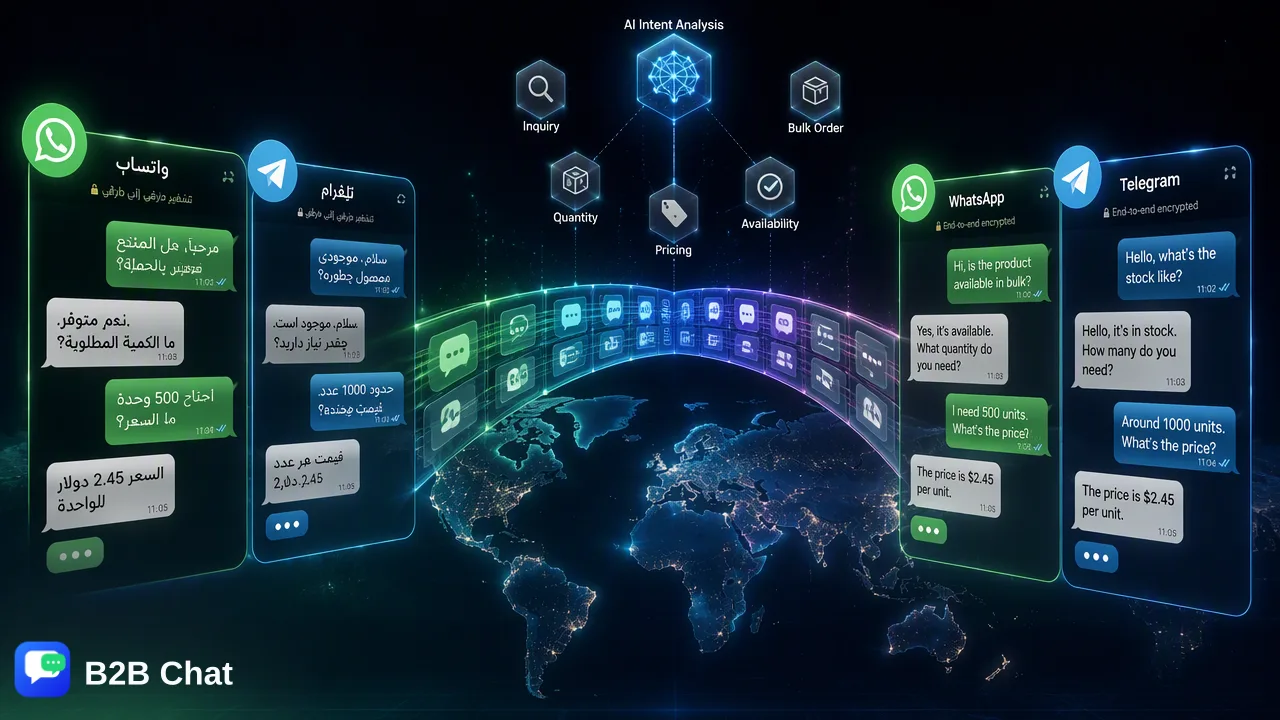
Learn how a centralized B2B chat assistant streamlines cross-border customer service by integrating WhatsApp, Telegram, and LINE workflows with AI translation and intent-based response assistance.
A B2B chat assistant supports multilingual customer service by centralizing WhatsApp, Telegram, and LINE conversations into a single workspace. By utilizing AI translation across 200+ languages and intent-based response assistance, teams can interpret customer needs and automate first-line replies. This unified approach helps organizations maintain consistent communication workflows regardless of the customer's native language or preferred messaging platform, reducing the operational friction of switching between different applications and manual translation tools.
The Challenge of Global Customer Support
Operating across borders requires organizations to communicate with customers in their preferred languages and on their preferred messaging platforms. Managing diverse messaging channels like WhatsApp, Telegram, and LINE creates complexity in maintaining consistent service. When support teams must constantly switch between different applications and external translation tools, response times increase and the context of the conversation can be lost. Furthermore, language barriers introduce significant operational friction. Customers expect accurate, context-aware responses regardless of their native language. Relying on manual translation processes or disjointed communication tools makes it difficult for support teams to scale their operations efficiently. A fragmented approach to customer service often leads to misinterpretations, delayed resolutions, and an increased workload for human agents who must navigate multiple interfaces just to handle standard inquiries. Addressing these challenges requires a consolidated workflow that brings both the messaging channels and the necessary translation capabilities into one environment.
Centralizing Communication Workflows
To resolve the inefficiencies of fragmented communication, organizations can deploy a centralized B2B chat assistant. With a unified workspace, teams can manage multiple accounts across different platforms in one place, significantly reducing the need to switch between separate applications. By aggregating WhatsApp, Telegram, and LINE accounts into a single interface, support operators gain a comprehensive view of all incoming customer inquiries. This centralized platform is delivered via a downloadable client available for both Windows and macOS environments. The desktop client approach provides a stable workspace for teams handling high volumes of cross-border traffic. Within this environment, operators can organize conversations, track customer interactions, and manage multiple logins without disrupting their daily workflows. Consolidating these channels not only streamlines the physical workspace for support agents but also establishes a foundation for integrating advanced tools, such as automated translation and response assistance, directly into the flow of conversation.
Leveraging AI for Multilingual Conversations
Once communication channels are centralized, addressing the language barrier is the next critical step in cross-border customer service. A B2B chat assistant integrates AI translation capabilities directly into the messaging workspace, reducing reliance on external translation applications. This AI translation supports over 200 languages, automatically detecting the language of incoming customer messages and translating them for the support agent directly within the interface. Crucially, this translation is context-aware. Rather than providing rigid, literal translations that might miss the nuance of a customer's issue, the system adjusts expressions based on the conversation flow. This helps teams interpret technical terms, regional idioms, and specific customer service inquiries accurately. By embedding context-aware translation into the daily workflow, support teams can confidently engage with a global audience. Operators can read incoming messages in their native language and draft replies that the system then translates back into the customer's language, maintaining a natural and professional dialogue across diverse regions.
Automating First-Line Response Assistance
Beyond translation, a B2B chat assistant supports support teams by streamlining the creation of replies through AI-driven tools. AI Customer Service features are designed to interpret customer intent from incoming messages and the surrounding conversation context. Instead of replacing human agents, these tools assist in generating automated first-line responses, helping teams handle routine inquiries more efficiently. When a customer sends a message, the system analyzes the text to understand the underlying request. It then uses this intent understanding to suggest or draft an appropriate reply based on the established context of the conversation. This capability is particularly useful for managing initial touchpoints, acknowledging receipt of complex issues, or resolving common questions without immediate human intervention. By automating these first-line responses, organizations can provide prompt attention to customers while freeing up human support agents to focus on more complex, nuanced issues that require detailed review and specialized problem-solving.
FAQ
Which messaging platforms does the B2B chat assistant support?
The B2B chat assistant functions as a comprehensive customer service tool that supports WhatsApp, Telegram, and LINE. It helps organizations aggregate multiple accounts from these platforms into a single unified workspace, helping support teams manage diverse communication channels without constantly switching between different applications.
How does AI translation handle different languages and contexts?
The integrated AI translation automatically detects and translates customer messages across more than 200 languages. To support accuracy in customer service interactions, the translation is context-aware, meaning it adjusts expressions and terminology based on the specific flow and context of the conversation rather than relying solely on literal word-for-word translation.
Can AI customer service replace human support agents?
No, the AI customer service tools are designed to assist human agents rather than fully replace them. The system interprets customer intent from incoming messages to help generate automated first-line responses. This assists teams in handling routine inquiries quickly, helping human operators focus their attention on complex problem-solving and nuanced customer interactions.
How is the B2B chat assistant delivered to the team?
The platform is delivered through a downloadable client rather than a web-only interface. Organizations can install the workspace using the available Windows and macOS downloads, providing support teams with a dedicated desktop environment for managing multiple logins, translations, and customer conversations.