Scaling Multi-Location Customer Communication: A Framework for Centralized Messaging
Discover how centralized messaging for multi-location business unifies WhatsApp, Telegram, and LINE communication across branches.
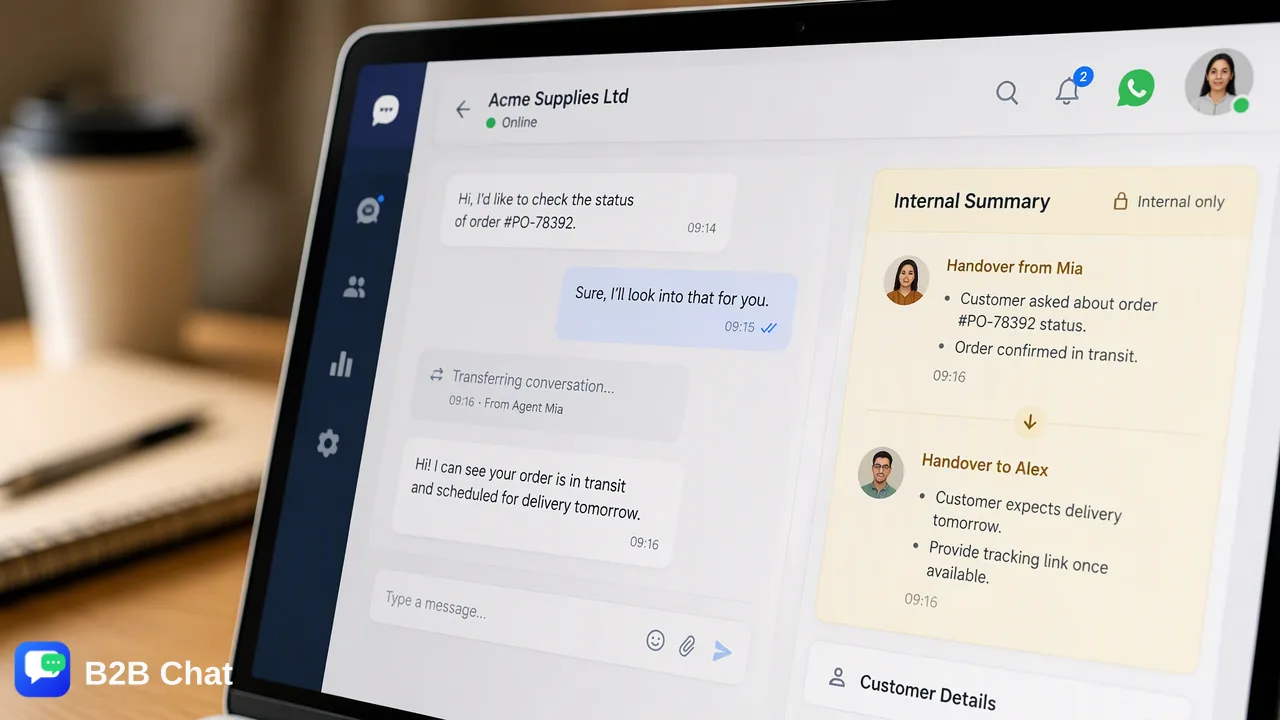
Learn how multi-location businesses can replace fragmented branch messaging with a centralized workspace combining account aggregation, context-aware translation, and automated intent understanding.
A centralized messaging framework for multi-location businesses consolidates disparate branch communication accounts into a unified workspace. Instead of isolating customer conversations across separate branch devices or individual apps, organizations aggregate messaging channels such as WhatsApp, Telegram, and LINE onto a single platform. Supported by AI-driven intent understanding and context-aware translation, this architecture helps teams maintain uniform service standards, preserve conversation history across locations, and support timely routing without losing local responsiveness.
The Operational Cost of Siloed Messaging
As distributed businesses expand across cities or regions, decentralized communication quickly becomes an operational liability. Many organizations initially let local branches manage customer inquiries through dedicated branch phones or unlinked messaging applications. While this offers immediate convenience for local staff, it fractures organizational oversight. Siloed messaging introduces three primary operational risks:
- Inconsistent Customer Experiences: Disconnected branches adopt divergent communication tones, response protocols, and information accuracy. Customers interacting with multiple locations encounter conflicting details and erratic quality. * Fragmented Lead Tracking and Visibility: When prospective customers message a branch directly on an unmonitored account, leadership cannot track inquiry status, assess follow-up diligence, or review pipeline progression. Inquiries can easily sit unanswered during local branch closures. * Security and Data Continuity Hazards: Housing interaction history on individual branch devices ties vital corporate relationships to local hardware. If staff depart or devices are misplaced, past context, conversation trails, and contact access disappear. Lightweight messaging tools lack the multi-account architecture needed to sustain operational growth, making a structured, centralized model necessary as conversation volume climbs.
The Case for Centralized Communication Architecture
Moving to centralized messaging for multi-location business operations replaces isolated device management with an aggregated desktop workspace. Platforms such as B2B Chat provide downloadable clients for Windows and macOS, allowing support and marketing operations to connect and supervise multiple WhatsApp, Telegram, and LINE accounts from one interface. Centralization creates structured operational oversight across several key areas:
| Operational Dimension | Decentralized Branch Setup | Centralized Messaging Workspace |
|---|---|---|
| Account Access | Physical phones per location | Unified desktop multi-login client |
| Channel Scope | Single apps on fragmented hardware | Combined WhatsApp, Telegram, and LINE |
| Queue Visibility | Local store staff only | Organization-wide oversight |
| Context Retention | Trapped on individual devices | Maintained in shared operational records |
| By consolidating accounts within a common operational layer, organizations eliminate the friction of constant tool switching. Supervisory teams can review ongoing dialogues, maintain uniform brand language, and ensure that inbound inquiries receive attention regardless of local staffing constraints. |
Scaling with AI: Translation and Intent Understanding
As message volumes increase across geographically diverse markets, manual routing and direct human translation often create operational bottlenecks. Modern centralized messaging workspaces incorporate AI assistance to support frontline teams during peak volumes and across linguistic boundaries. AI translation tools automatically detect incoming languages and translate dialogue across more than 200 languages. Because B2B Chat adapts translation expression based on conversational context, agents can review customer inquiries and draft replies in their native language while maintaining appropriate phrasing for the customer's cultural context. Simultaneously, AI customer-service automation interprets customer intent directly from incoming messages and recent thread history. This intent understanding supports automated first-line triage, addressing routine transactional questions immediately while structuring conversation details for human review. Rather than replacing human operators, this assistance helps staff prioritize complex inquiries and maintain consistent service quality across multiple branch accounts.
Best Practices for Standardizing Handoffs and History
Establishing a centralized workspace is most effective when paired with disciplined operational workflows. Multi-location teams should adopt standard protocols to manage handoffs, thread history, and escalations:
- Standardize Thread History Capture: Ensure every interaction across WhatsApp, Telegram, or LINE remains linked to the customer record. Complete history prevents customers from needing to restate their background when reassigned from a regional branch to a specialist team. 2. Establish Clear Escalation Boundaries: Define explicit triggers for when AI-assisted first-line responses must transfer to human agents. Inquiries involving sensitive complaints, complex orders, or high-value accounts should route directly to designated personnel. 3. Maintain Context-Aware Internal Handoffs: When reassigning a conversation between branches—such as transferring an inquiry from an online regional queue to a local fulfillment team—agents should leave structured internal summaries to preserve context. 4. Schedule Periodic Response Reviews: Supervisors should regularly audit centralized conversation transcripts across accounts to ensure that communication protocols, tone guidelines, and response times align with corporate standards.
FAQ
Why do multi-location businesses struggle with traditional messaging tools?
Traditional consumer messaging tools and isolated branch setups operate in disconnected silos. When individual branches run separate mobile devices or unlinked profiles, headquarters lacks visibility into customer interactions, response timelines, and support quality. This fragmentation creates operational gaps where conversations can be dropped, customer context is lost between shifts or transfers, and brand messaging varies widely across locations.
How does a centralized workspace support cross-branch response consistency?
A centralized workspace aggregates accounts into a single desktop interface, allowing managers and agents to monitor incoming queues across every branch location simultaneously. Shared oversight helps organizations spot high-volume backlogs early, allocate agent capacity dynamically, and apply standardized operational guidelines across all conversations, rather than relying on fragmented local staff monitoring individual handsets.
What role does AI play in managing high-volume, multi-language customer support?
AI assists customer service by parsing incoming message context to detect language and interpret initial customer intent. In a multi-location model spanning diverse regions, automated translation across 200+ languages and automated first-line response assistance help frontline teams review and address inquiries promptly, supporting human agents without requiring dedicated multilingual staff at every branch.
Learn More
Choose the product information that fits the next step in your workflow.