Beyond Dashboards: How to Turn Customer Conversations into Actionable Intelligence
Discover how customer conversation intelligence bridges the gap between quantitative dashboards and unstructured messaging data across global channels.
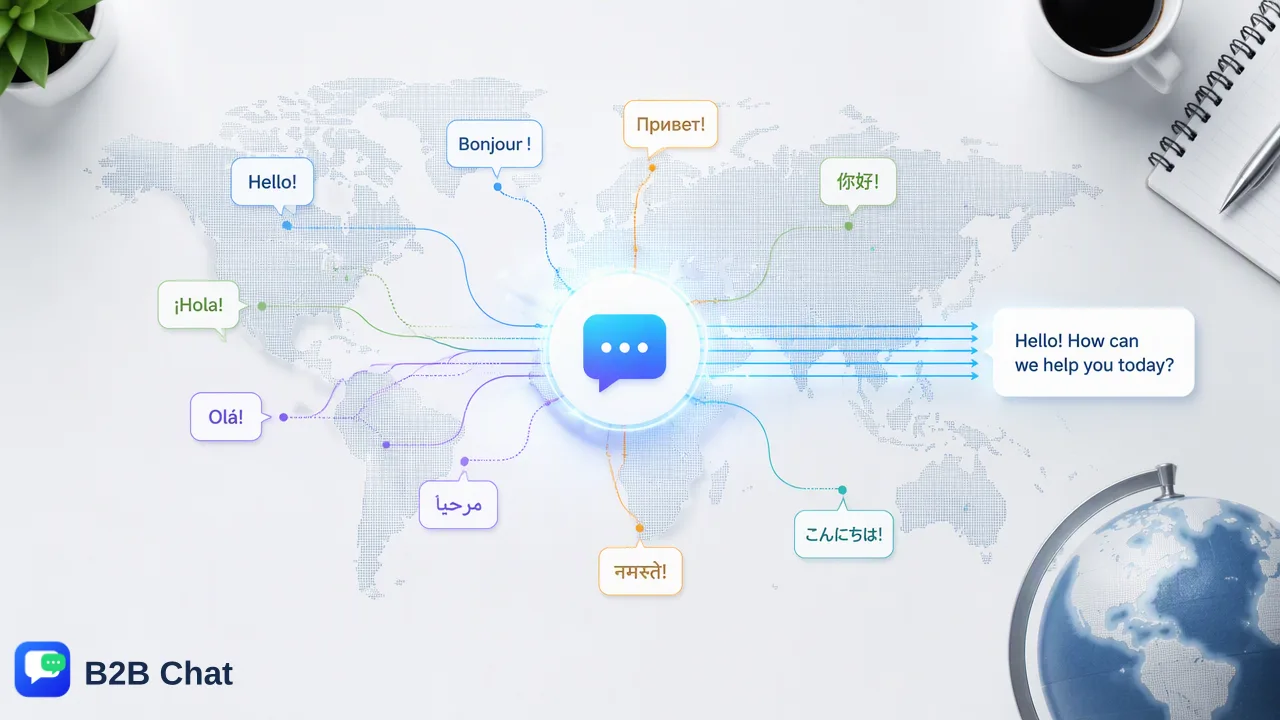
Learn how modern support and operations teams transform unstructured messaging data from WhatsApp, Telegram, and LINE into strategic customer conversation intelligence.
Traditional BI dashboards provide a quantitative view of operational metrics such as volume, handle time, and resolution speed, but they miss the qualitative context hidden inside unstructured messaging dialogues. Customer conversation intelligence extracts structured meaning from these multi-turn interactions across platforms like WhatsApp, Telegram, and LINE. By applying AI-driven intent analysis and context-aware interpretation to customer messages, organizations can identify recurring operational friction points, understand underlying customer intent, and inform strategic decisions without relying on selective sampling or manual chat audits.
The Dashboard Blind Spot in Modern Messaging
Customer operations teams have long relied on business intelligence dashboards to monitor contact centers and messaging channels. Typical dashboard panels display aggregate ticket volumes, average first-response times, and resolution rates. While these figures help leaders monitor operational pacing, they offer little visibility into customer sentiment or the qualitative reasons behind customer friction. When a sudden spike in inquiries occurs, a dashboard indicates the volume surge but cannot articulate why customers are reaching out. Teams traditionally attempt to bridge this visibility gap using two methods:
- Manual spot-checking: Supervisors review a tiny fraction (often under five percent) of chat transcripts, introducing sampling bias and failing to reflect broader trends. - Post-interaction surveys: CSAT and NPS forms suffer from low response rates, capturing only the most frustrated or delighted respondents while missing the moderate majority. Because conversational messaging across channels like WhatsApp, Telegram, and LINE is naturally unstructured, informal, and fragmented across multi-turn exchanges, numeric indicators fail to capture customer nuance. Organizations need a systematic method to analyze dialogue directly.
Unlocking Intelligence from Unstructured Customer Dialogues
Customer conversation intelligence turns raw, unstructured dialogue into structured operational data. Instead of relying on manual tagging, where agents choose from broad, predefined categories, AI-driven topic classification and intent recognition evaluate the actual text of incoming messages. By processing interactions through automated classification, teams can analyze all customer messages rather than a sampled subset. AI models examine both the current statement and previous message context to interpret intent. For example, when a user asks about delivery timelines after mentioning a regional holiday, context-aware analysis links the inquiry to the relevant shipping disruption rather than misclassifying it as a generic tracking request. This continuous interpretation supports first-line operations by informing automated responses for routine inquiries while surfacing emerging product defects, billing confusion, or workflow blockers directly to operational leads.
Scaling Conversation Insights Across Global Channels
Global organizations face added operational complexity when customer conversations span multiple decentralized social messaging platforms and languages. Support operations frequently maintain independent accounts across WhatsApp, Telegram, and LINE, which leads to fragmented conversation logs and isolated data silos. A unified messaging workspace addresses these fragmentation challenges by centralizing multi-account management within a single environment. Downloadable client software on Windows and macOS allows support staff to operate multiple accounts across WhatsApp, Telegram, and LINE without constant tool switching. | Operational Challenge | Traditional Approach | Conversation Intelligence Workspace | | :--- | :--- | :--- | | Account Management | Multiple browser windows and separate devices | Centralized multi-login client for WhatsApp, Telegram, and LINE | | Language Coverage | Static translation tools or siloed regional agents | Automatic detection and context-aware translation across 200+ languages | | Intent Detection | Keyword matching and manual ticket labeling | AI intent interpretation grounded in multi-turn conversation context | | First-Line Response | Static auto-responders or delayed human review | Context-informed automated first-line assistance | In international operations, customer sentiment can be distorted by literal, out-of-context translations. B2B Chat integrates automatic language detection and context-aware translation covering more than 200 languages. Because expressions and vocabulary are interpreted relative to the ongoing dialogue, team leads receive an accurate representation of customer intent regardless of the customer's native tongue.
Turning Conversations into Strategic Assets
Extracting intelligence from conversations shifts customer messaging from a reactive cost center into an informative strategic input. When qualitative feedback is classified systematically, support and product teams can pinpoint specific operational improvements. To translate conversational data into organizational adjustments, teams can adopt a structured workflow:
- Consolidate Messaging Inflow: Unify active WhatsApp, Telegram, and LINE streams within a single workspace to establish a comprehensive data foundation. 2. Standardize Intent Classification: Apply automated classification across all incoming interactions to detect recurring friction points, feature inquiries, or delivery concerns. 3. Assist First-Line Support: Deploy AI customer service capabilities to interpret intent and assist with standard responses, reserving human specialists for complex escalations. 4. Feed Qualitative Trends to Product Teams: Share aggregated conversation themes with logistics, marketing, and product development to address root causes before ticket volume escalates. By moving past the limitations of traditional BI charts and embracing customer conversation intelligence, organizations gain a direct, grounded understanding of customer needs across their global communication channels.
FAQ
Why are quantitative BI dashboards insufficient for understanding customer intent?
BI dashboards aggregate high-level numeric metrics such as ticket counts, response latencies, and CSAT averages. While these metrics show what happened and when, they fail to reveal the operational causes behind shifts in customer sentiment or why specific issues recur. Crucial context remains buried inside unstructured text exchanges across messaging channels.
How does AI-driven conversation analysis assist customer support teams?
AI-driven analysis evaluates incoming customer messages alongside conversation context to interpret intent and assist automated first-line responses. Rather than replacing human agents, it serves as a decision-support layer that handles routine inquiries and provides context to help team members manage complex cases.
How do organizations manage conversation intelligence across multiple global messaging channels?
Organizations use dedicated messaging workspaces like B2B Chat to aggregate accounts across WhatsApp, Telegram, and LINE within a single desktop client. With context-aware AI translation spanning 200+ languages, teams can evaluate customer dialogue across disparate international regions without language barriers distorting customer sentiment.
How does continuous conversation intelligence differ from post-interaction surveys?
Post-interaction surveys typically yield low response rates and capture biased extremes—either highly dissatisfied or highly satisfied customers. In contrast, conversation intelligence analyzes 100% of incoming interactions directly, giving teams an objective, comprehensive record of customer inquiries, operational friction points, and recurring topics.
Learn More
Choose the product information that fits the next step in your workflow.