Turning Public Feedback into Trust: A Messaging-First Framework for Review Management
Learn how a messaging-first customer feedback management strategy turns public reviews into trust with structured response frameworks and AI support.
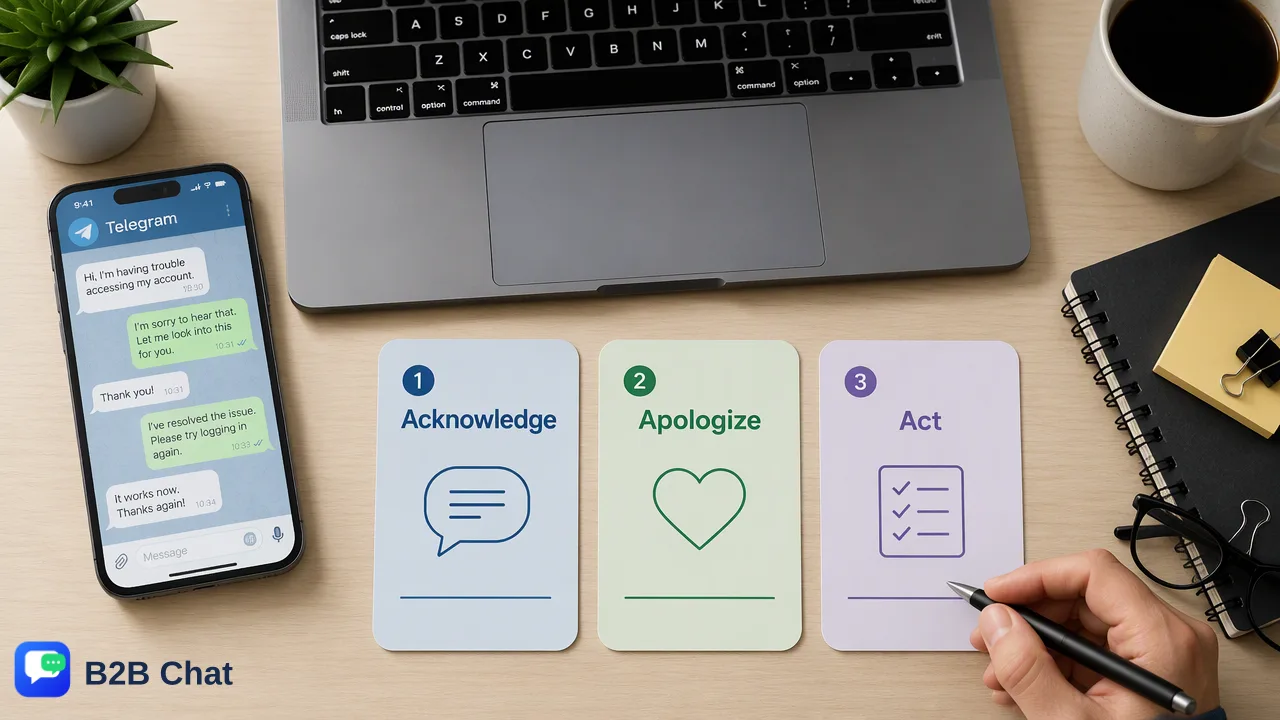
Discover how a messaging-first customer feedback management strategy helps businesses convert public reviews into brand trust, improve local search visibility, and resolve disputes using structured response workflows.
A customer feedback management strategy bridges public review monitoring with private messaging resolution. Modern customer service requires responding to public feedback to maintain brand trust and signal activity to search algorithms. By using the 'Acknowledge, Apologize, Act' framework, organizations can address public sentiment transparently and transition complex operational issues into direct, private messaging channels like WhatsApp, Telegram, or LINE. Integrating AI-assisted intent interpretation and context-aware translation supports prompt, consistent communication across global customer touchpoints.
The Strategic Value of Public Feedback
Public customer feedback is a fundamental pillar of modern brand credibility. Review platforms serve as public social proof for prospective buyers who evaluate a business based on how it responds to criticism as much as its overall rating. Transparently managing negative feedback demonstrates operational accountability, reassuring prospective customers that the organization actively listens and corrects mistakes. Simultaneously, timely and personalized responses to positive reviews reinforce customer loyalty and deepen long-term engagement. Beyond buyer perception, consistent interaction with public reviews signals operational activity to search algorithms. Search platforms favor businesses that demonstrate regular engagement with their audience, making structured review management an asset for local search engine visibility.
The Acknowledge, Apologize, Act Framework
Addressing public feedback effectively demands a repeatable, standardized process. Unstructured or emotional replies can escalate customer frustration and harm brand reputation. The 'Acknowledge, Apologize, Act' framework provides support teams with a clear roadmap for de-escalating tension:
- Acknowledge: Validate the reviewer's specific situation. Avoid generic canned responses by referencing the core issue they mentioned, showing that a human has reviewed their feedback. * Apologize: Express sincere regret for the breakdown in customer experience, regardless of whether the fault lies with product limitations, logistics, or user error. Taking ownership immediately diffuses defensiveness. * Act: Outline the corrective measure being taken. For sensitive or account-specific issues, direct the reviewer to an accessible direct messaging channel to complete the resolution privately.
Bridging Public Reviews and Private Messaging Workflows
While public acknowledgment shows accountability to prospective buyers, public boards are poorly suited for troubleshooting. Resolving account disputes, shipping discrepancies, or technical bugs requires sharing sensitive information that should not appear in open forums. A messaging-first customer feedback management strategy uses the public reply to invite the customer into a direct messaging environment. | Channel Type | Primary Function | Information Shared | Desired Outcome | | :--- | :--- | :--- | :--- | | Public Review Board | Social proof, brand accountability, and search signaling | Non-sensitive, high-level acknowledgment | Public de-escalation and channel transition | | Private Messaging (WhatsApp, Telegram, LINE) | Troubleshooting, account verification, and dispute resolution | Order IDs, phone numbers, screenshots, and account logs | Full case resolution and customer retention | By directing customers toward channels like WhatsApp, Telegram, or LINE, support teams establish an asynchronous, convenient dialogue that customers can manage directly from their mobile devices.
Scaling Global Messaging with Centralized Workspaces and AI
Managing private conversations across multiple regional platforms can quickly overwhelm support teams without centralized infrastructure. Multi-account fragmentation leads to delayed response times, dropped tickets, and inconsistent messaging. Workspaces like B2B Chat centralize multiple WhatsApp, Telegram, and LINE accounts into a single downloadable desktop client for Windows and macOS. This aggregation helps teams monitor incoming private-domain communications without constant tool switching. To manage volume during peak periods, AI customer service tools assist team workflows by interpreting customer intent directly from incoming messages and conversational context. These tools support automated first-line replies to triage routine inquiries before routing complex cases to human specialists. Furthermore, for cross-border businesses, integrated AI translation automatically detects and translates messages across more than 200 languages, adjusting expressions according to conversation context to preserve brand voice across international markets.
FAQ
How does responding to customer reviews influence local search performance?
Consistent engagement with public reviews signals ongoing business activity and responsiveness to search engine algorithms. Active interaction shows search platforms that an organization values customer experience and regularly updates its profile, which can support local search visibility.
What is the 'Acknowledge, Apologize, Act' framework?
It is a standardized three-step method for handling customer feedback. Teams acknowledge the specific experience shared by the user, offer an apology for any friction encountered, and outline actionable steps or invite the reviewer into a private messaging channel to investigate and resolve the issue.
How can AI assist customer service teams during feedback resolution?
AI customer service tools can interpret intent from incoming messages and conversation context to assist teams with automated first-line replies. When handling global inquiries, context-aware AI translation helps support agents communicate accurately across more than 200 languages without losing conversational nuances.
Why should organizations migrate public review complaints to private messaging channels?
Public review forums are designed for high-level customer sentiment rather than detailed problem-solving. Transitioning customers to direct messaging channels such as WhatsApp, Telegram, or LINE facilitates the secure exchange of order details and account data, supporting faster, personalized resolution without airing operational back-and-forth publicly.
Learn More
Choose the product information that fits the next step in your workflow.