How to Launch Your First Customer Service AI Agent: A Risk-Managed Approach
Learn customer service AI agent deployment best practices. Discover how to launch phased rollouts on WhatsApp and Telegram with clear human handoffs.
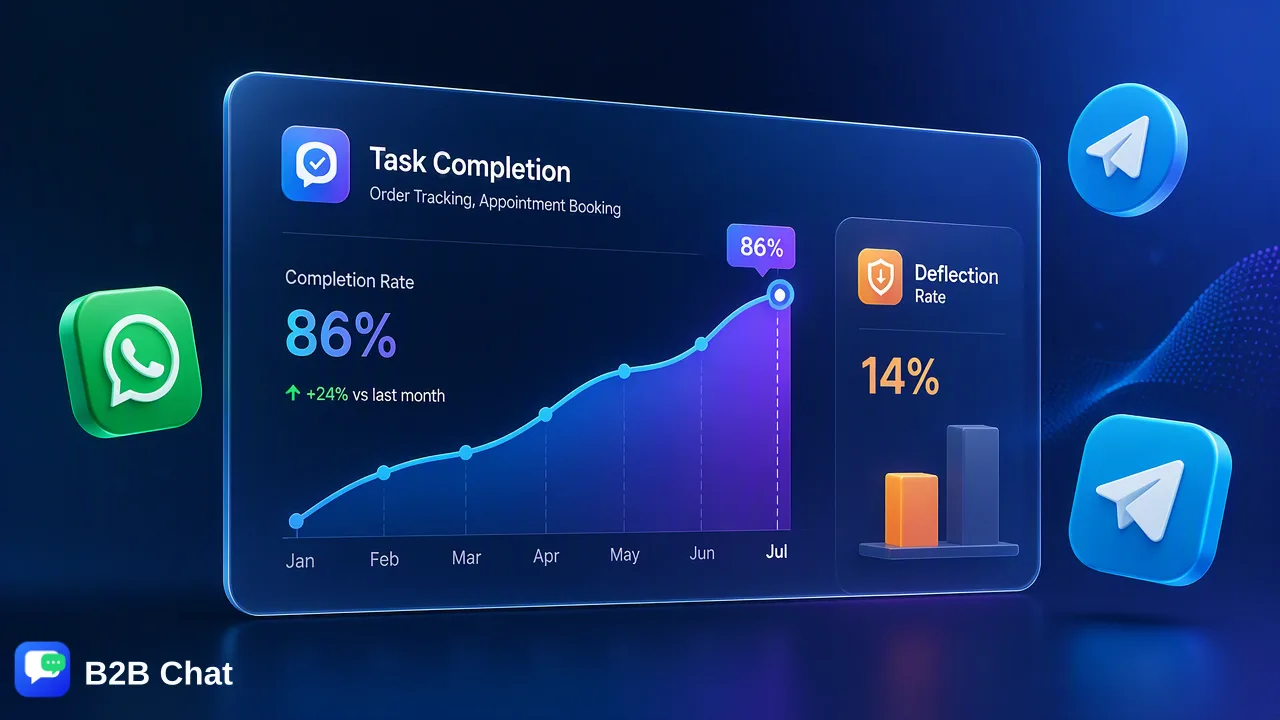
A strategic guide for organizations deploying AI customer service agents on WhatsApp and Telegram, focusing on phased rollouts, intent-based responses, and clear human-handoff protocols.
Launching an AI customer service agent is most successful when organizations start with a single, high-volume task rather than attempting full automation immediately. By defining clear guardrails for human escalation and measuring success through task completion—such as successful order tracking or appointment booking—teams can improve operational efficiency while maintaining high service quality in messaging environments like WhatsApp and Telegram. Implementing customer service ai agent deployment best practices requires a phased approach that prioritizes conversation context and intent understanding to assist automated first-line responses effectively.
The Case for a Phased AI Deployment
Organizations often face challenges when attempting to automate all customer inquiries simultaneously. A risk-managed approach dictates starting with one specific, high-volume task. This phased strategy allows support teams to monitor performance and adjust workflows without disrupting existing service levels. For global messaging platforms like WhatsApp and Telegram, deploying an AI agent to handle a single repetitive inquiry—such as order tracking or appointment booking—provides immediate operational relief. B2B Chat supports this methodology by offering a comprehensive customer service tool where teams can manage multiple accounts in one place. By centralizing conversations through a downloadable client for Windows or macOS, organizations can isolate the initial AI deployment to specific channels or accounts. This controlled rollout helps teams validate that the AI correctly interprets customer intent from incoming messages before expanding its responsibilities to more complex support scenarios.
Defining Your AI Agent’s Scope and Guardrails
Establishing clear boundaries is a fundamental component of customer service ai agent deployment best practices. AI agents should be configured to assist automated first-line responses rather than fully replacing human support staff. The system must interpret customer intent based on conversation context, ensuring that replies remain relevant to the ongoing dialogue. Equally important is defining clear triggers for when a conversation must escalate to a human agent. These guardrails prevent the AI from mishandling complex or sensitive inquiries. When operating across WhatsApp and Telegram, teams can utilize B2B Chat to monitor these automated interactions alongside human-led conversations. If an inquiry falls outside the AI's defined scope, the system should seamlessly transition the chat to a human operator. This hybrid approach ensures that routine questions receive immediate automated responses, while nuanced issues benefit from human review and intervention.
Testing and Refinement in Controlled Environments
Before executing a full-scale rollout, organizations must test the AI agent in a controlled environment with a small group of users. This validation phase is critical for identifying gaps in the agent's intent understanding and refining its automated responses. Teams should leverage historical conversation context to train and adjust the AI, ensuring it accurately recognizes common phrasing and regional variations in customer inquiries. For teams managing cross-border ecommerce or global marketing, testing may also involve multilingual support. B2B Chat facilitates this by integrating AI translation across more than 200 languages, allowing teams to evaluate how well the AI handles intent recognition in different linguistic contexts. During this testing phase, support operators can review the AI's performance within the centralized workspace, adjusting the automated first-line responses based on real-world interactions. Continuous refinement during this controlled period mitigates the risk of deploying an uncalibrated agent to the broader customer base.
Measuring Success Beyond Deflection
A common misstep in AI deployment is measuring success solely by the number of human handoffs avoided, often referred to as deflection rates. While reducing the volume of human-handled tickets is a benefit, true effectiveness is measured by task completion rates. Organizations should focus on metrics that indicate a resolved customer need, such as a successfully tracked order or a confirmed appointment booking. Evaluating task completion provides a more accurate picture of the AI agent's utility. When an AI successfully interprets customer intent and provides the necessary information without requiring human intervention, it adds tangible value to the support workflow. Teams utilizing B2B Chat for WhatsApp and Telegram account management can track these outcomes within their centralized workspace. By analyzing which tasks the AI completes most efficiently, organizations can make data-informed decisions about which workflows to automate next, ensuring that subsequent phases of the deployment continue to support high-quality customer service.
FAQ
What is the first step in deploying an AI customer service agent?
The first step is to identify and isolate a single, high-volume task rather than attempting to automate all customer inquiries at once. Starting with a specific use case, such as order tracking or appointment booking, allows organizations to test the AI's ability to interpret customer intent from incoming messages in a controlled manner. This phased approach minimizes operational risk and provides a foundation for future expansion.
How do organizations ensure an AI agent maintains high service quality?
Organizations maintain service quality by defining clear guardrails and testing the agent with a small group of users before a full-scale rollout. The AI should be configured to assist automated first-line responses based on conversation context. By continuously refining the agent's responses using historical data and ensuring it accurately understands intent, teams can prevent the system from mishandling inquiries.
When should an AI agent hand off a conversation to a human?
An AI agent should escalate a conversation to a human whenever an inquiry falls outside its defined scope or triggers specific guardrails. Clear escalation protocols are essential for complex, sensitive, or unrecognized requests. In platforms like WhatsApp and Telegram, this ensures that while routine questions receive automated replies, nuanced issues are seamlessly transitioned to human operators for review and resolution.
How is the effectiveness of an AI agent measured?
Effectiveness should be measured by task completion rates rather than just the volume of deflected tickets. Success metrics include the number of successfully resolved specific tasks, such as completed appointment bookings or fulfilled order tracking requests. Focusing on task completion ensures the AI is genuinely resolving customer needs rather than merely preventing them from reaching a human agent.