Automated Messaging for Lead Qualification and Support
Learn how AI-assisted messaging helps qualify inbound leads, assist first-line customer inquiries, and coordinate multi-channel support around the clock.
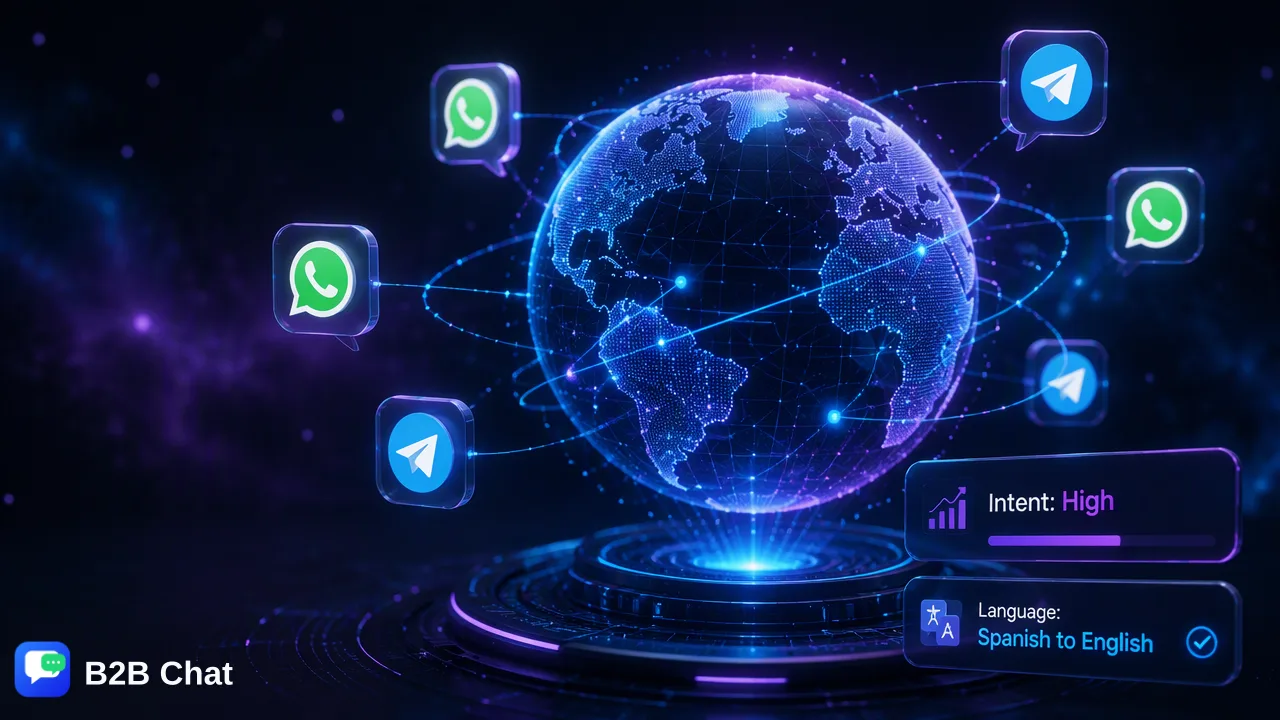
Discover how businesses use AI-assisted messaging to interpret customer intent, qualify inbound leads, and deliver 24/7 support across global channels.
Automated messaging workflows help businesses qualify inbound leads and manage routine inquiries by interpreting customer intent and conversational context. Operating across high-volume channels such as WhatsApp, Telegram, and LINE, AI customer service systems assist support teams by drafting immediate first-line responses, categorizing buyer requirements, and maintaining 24/7 service availability. By delegating repetitive informational queries to structured automation, organizations support human agents so they can dedicate their time to complex, high-value customer interactions.
The Role of Automation in Modern Customer Engagement
Customer engagement across modern commercial channels has shifted toward real-time conversational messaging. Buyers increasingly initiate contact through messaging platforms like WhatsApp, Telegram, and LINE, expecting immediate answers to preliminary questions regarding product features, availability, and onboarding procedures. Managing these interactions across multiple disparate accounts presents operational hurdles for growing teams. When staff members must constantly toggle between individual devices or browser tabs, response times slow down, and inbound inquiries risk being overlooked. Implementing centralized messaging management through a dedicated desktop client—available on operating systems such as Windows and macOS—helps teams aggregate multiple communication channels into a unified interface. | Engagement Model | Inbound Triage Speed | Handling of Repetitive FAQs | Staff Focus Area | | :--- | :--- | :--- | :--- | | Manual Handling | Dependent on agent queue and availability | Manual drafting for each identical question | Repetitive administrative answering | | Automated First-Line Assistance | Immediate contextual response generation | Automated intent recognition and standard replies | Complex problem solving and high-value conversations | Deploying automated workflows within this centralized framework relieves human personnel from answering identical, low-complexity questions repeatedly. Rather than spending valuable working hours manually replying to standard operating inquiries, support and sales professionals can concentrate on high-touch consultations and strategic accounts.
Qualifying Leads with AI-Driven Intent Analysis
Effective lead qualification requires more than static keyword matching or rigid numeric menus. Modern buyers express their purchasing criteria, urgency, and technical parameters using natural language. AI customer service systems evaluate the specific intent and conversational context embedded within each incoming message, helping businesses interpret buyer readiness. When a prospect reaches out, the automated system assesses the context of the exchange to determine the inquiry's primary goal. The system can distinguish between casual browsing, urgent technical support requests, and high-intent commercial questions. By interpreting these contextual cues, automated first-line workflows assist in gathering essential qualification criteria before handing the interaction over to an account executive. In cross-border business environments, inbound leads frequently communicate in different languages. To maintain qualification accuracy across regions, integrated translation capabilities automatically detect languages across a library of over 200 languages. Because the translation engine adjusts its phrasing based on the ongoing conversation context, prospective customers receive clear, context-sensitive responses that preserve professional terminology.
Providing 24/7 Support Through Intelligent Automation
Global organizations operate across multiple time zones, making round-the-clock availability an essential component of customer retention and lead capture. Unanswered messages sent outside traditional working hours frequently lead prospective buyers to seek alternatives. AI-assisted customer service provides continuous 7x24 hour automated responses, keeping inbound communication channels responsive at all times. When prospective buyers or existing clients submit questions during off-hours, the automated system handles first-line interactions by drawing on conversation context to deliver relevant information immediately. To manage high volumes of simultaneous inbound traffic without administrative bottlenecks, organizations utilize workspaces that support multi-account operations without artificial restrictions on registered ports or connection duration. Consolidating multiple WhatsApp, Telegram, and LINE accounts within a single workspace lets support teams scale operational reach while maintaining consistent first-line response standards.
Best Practices for Balancing Automation and Human Oversight
While intelligent automation enhances operational responsiveness, maintaining customer trust requires a structured balance between automated messaging and human oversight. Complete reliance on unmonitored automation can lead to impersonal interactions or miscommunication during nuanced discussions. Organizations achieve optimal results by using AI primarily to assist and automate first-line responses, reserving human intervention for high-stakes interactions. When an incoming message involves complex technical criteria, commercial contract terms, or sensitive customer complaints, the system should smoothly transition the dialogue to an experienced human agent. To ensure operational stability, teams should maintain clear internal escalation pathways and monitor ongoing conversations within their multi-account desktop workspace. Utilizing official communication paths, such as dedicated Telegram support channels and product-update communities, helps operational teams stay informed about system capabilities and best practices for managing social messaging workflows.
FAQ
How does AI automation assist in qualifying inbound leads?
AI customer service evaluates incoming customer messages alongside previous conversation context to determine the user's underlying intent. By identifying whether an inquiry relates to product capabilities, technical requirements, or general inquiries, the system helps categorize leads and route prioritized conversations to the appropriate team members.
Can AI automation completely replace human customer service teams?
AI automation functions as an operational assistant rather than a total replacement for human staff. Its primary role is to assist and automate first-line responses to repetitive inquiries, ensuring that complex negotiations, relationship management, and sensitive escalations remain under human review.
How do cross-border support teams handle multilingual customer inquiries?
Cross-border teams utilize automated language detection and context-aware translation across more than 200 languages. This workflow automatically identifies the language of incoming messages and adjusts phrasing based on dialogue context, supporting clear communication between international customers and native support agents.
Learn More
Choose the product information that fits the next step in your workflow.