Beyond the Chat Bubble: A Strategic Framework for Converting Website Visitors into Messaging Leads
Learn how a live chat lead qualification workflow centralizes messaging and uses AI intent assistance to qualify website visitors into high-intent leads.
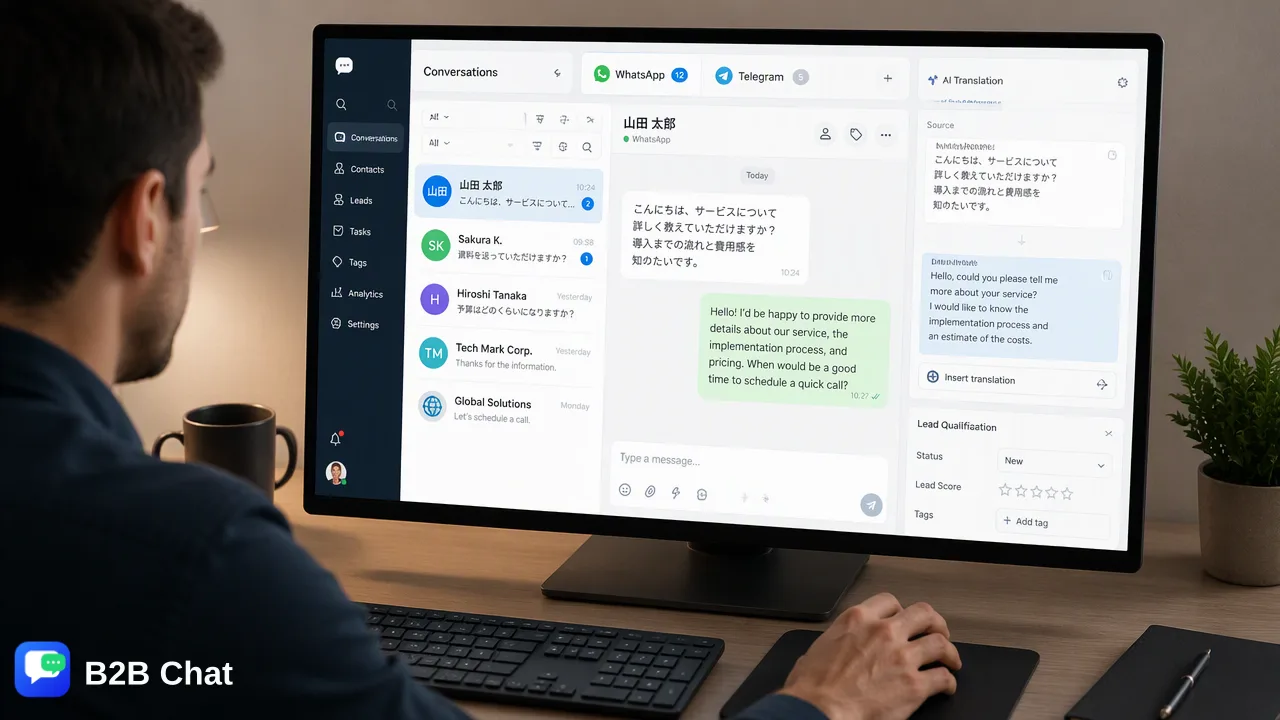
Discover how a live chat lead qualification workflow transforms website visitors into qualified leads using centralized multi-channel messaging and AI-assisted intent qualification.
A live chat lead qualification workflow transforms static website interactions into real-time conversations by engaging visitors directly through preferred messaging channels. Instead of directing prospects to passive web forms, organizations can use proactive chat prompts and automated first-line responses to interpret visitor intent from context. Centralizing incoming channels such as WhatsApp, Telegram, and LINE into a unified desktop workspace helps teams qualify inquiries immediately, maintain conversation history across touchpoints, and route promising opportunities to human operators without losing critical context.
The Shift from Passive Forms to Proactive Messaging
Static "Contact Us" forms create operational friction in modern customer acquisition. When prospective buyers encounter form fields requiring extensive contact details before receiving answers, engagement often drops. In contrast, messaging widgets invite immediate dialogue while the visitor's buying intent remains active. Transitioning to proactive messaging involves initiating targeted prompts based on visitor browsing behavior. A visitor reviewing technical specifications or enterprise pricing can be greeted with a prompt offering relevant guidance. By initiating dialogue within the chat bubble, teams can capture intent early, evaluate qualification parameters conversationally, and encourage visitors to continue discussions on global messaging apps. Moving conversations from ephemeral website browser sessions to established messaging channels helps maintain persistent communication even after the visitor navigates away from the page.
Centralizing Multi-Channel Inboxes in One Workspace
When organizations engage visitors across diverse regions, customer preferences fragment across different platforms. In many global markets, prospects prefer communicating via dedicated messaging apps like WhatsApp, Telegram, or LINE rather than web chat alone. However, managing separate tools for each platform creates fragmented records and slow response times. A structured live chat lead qualification workflow resolves this by aggregating channels into a centralized workspace. Operating through a downloadable client available on Windows and macOS, B2B Chat lets teams connect and manage multiple WhatsApp, Telegram, and LINE accounts within a unified interface. | Operational Challenge | Fragmented Inboxes | Centralized Workspace (B2B Chat) | | :--- | :--- | :--- | | Account Management | Multiple browser tabs and individual devices | Aggregated multi-account login in a desktop client | | Platform Coverage | Disconnected tools for WhatsApp, Telegram, LINE | Single workspace supporting WhatsApp, Telegram, and LINE | | Context Retention | Chat histories scattered across separate platforms | Consolidated conversation history preserved across interactions | | Agent Routing | Manual tracking of customer ownership | Coordinated team assignment and oversight | Consolidating incoming inquiries into one multi-login environment ensures customer context is preserved, assisting internal teams as leads move from initial inquiry to qualified status.
Leveraging Context-Aware AI for Intent Qualification
Managing incoming chat volume requires rapid assessment without placing an excessive burden on human agents. AI customer service assists this phase by interpreting visitor intent directly from incoming messages and conversation context to automate first-line responses. Rather than relying on rigid, pre-programmed decision trees that frustrate users, context-aware AI evaluates the nuances of customer inquiries. For example, when a prospect asks specific questions about system compatibility or implementation timelines, the AI recognizes high commercial intent, provides relevant preliminary details, and flags the interaction for human escalation. Key practices for automated qualification include:
- Interpreting Inquiry Context: Evaluating visitor phrasing to distinguish between exploratory browsing and high-intent buying signals. - Automating First-Line Responses: Providing instant, accurate replies to standard operational questions around the clock. - Assisting Operator Handoff: Summarizing context so sales and support personnel can review previous interactions before stepping in. By deploying AI customer service as an assistive tier, organizations maintain continuous responsiveness while ensuring human specialists focus their attention on complex negotiations.
Addressing Global Inquiries with Multilingual Support
Cross-border sales and global customer service frequently face language barriers that hinder prompt qualification. When international prospects initiate inquiries in their native tongue, delays caused by manual translation tools can stall high-intent conversations. Integrating automated translation into the messaging workflow helps teams engage international prospects smoothly. B2B Chat features AI translation covering more than 200 languages with automatic language detection. Crucially, the system adjusts translation expressions based on conversation context, supporting natural and professional dialogue. When a team member receives a message in Japanese via LINE, Spanish via WhatsApp, or Russian via Telegram, the workspace translates the customer's text automatically. Outbound replies drafted by the agent are translated back into the visitor's language with contextual appropriateness. This capability supports cross-border lead qualification without requiring dedicated native-speaking operators for every target market.
FAQ
How can AI assist lead qualification in a messaging workflow?
AI assists lead qualification by interpreting customer intent from incoming messages and ongoing conversation context. It automates first-line responses to address baseline inquiries instantly and identifies high-intent questions, helping human operators prioritize follow-up discussions effectively.
Why is a centralized messaging workspace important for lead qualification?
A centralized workspace lets teams manage multiple WhatsApp, Telegram, and LINE accounts from a single downloadable application on Windows or macOS. Consolidating platforms into one place prevents fragmented communication, preserves conversation history across channels, and streamlines lead assignment.
How does context-aware AI translation support global lead generation?
Context-aware AI translation automatically detects and translates messages across more than 200 languages while adjusting phrasing to fit the conversation context. This supports smooth, professional communication with international prospects across global messaging platforms without language delays.
Learn More
Choose the product information that fits the next step in your workflow.