Manual vs. Context-Aware Translation: Optimizing Global Customer Support
Compare manual vs context-aware translation for customer support. Learn how to optimize global messaging on WhatsApp and Telegram.
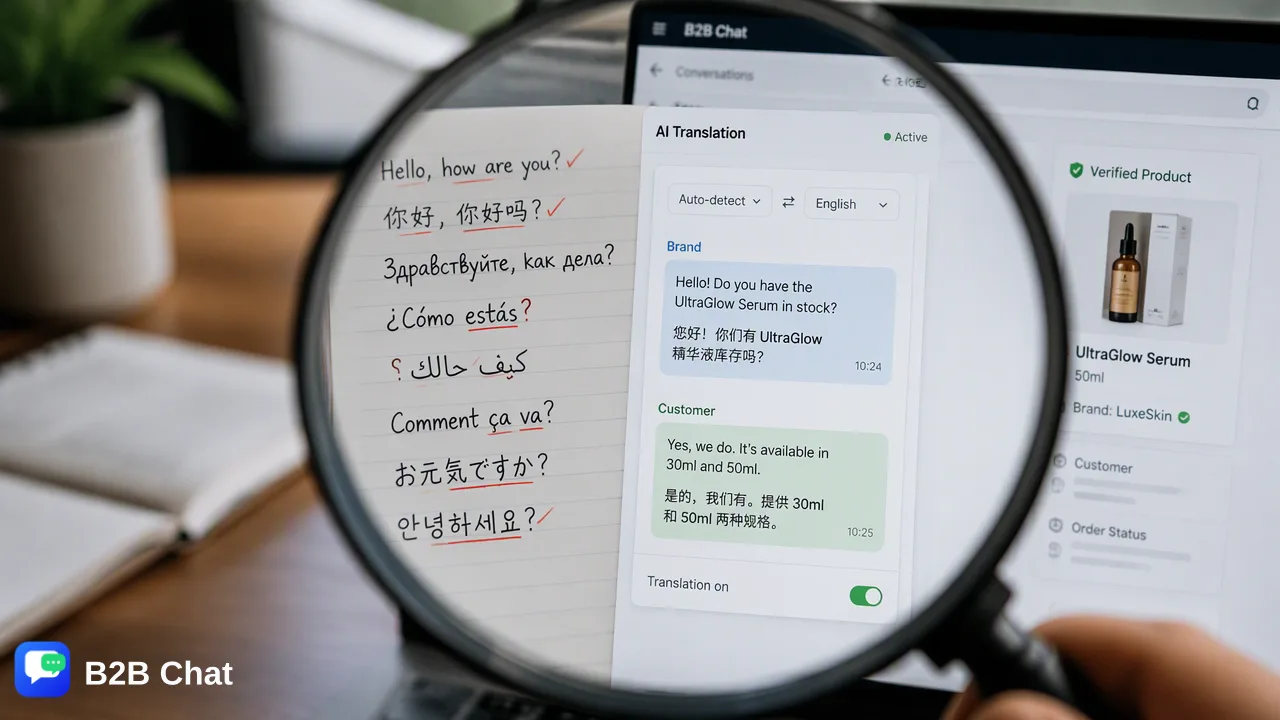
A strategic comparison of manual and context-aware translation methodologies for high-volume messaging support on platforms like WhatsApp and Telegram.
Manual translation offers maximum control for sensitive communications but lacks the speed required for high-volume messaging. Context-aware translation provides rapid, scalable support across 200+ languages by adjusting expressions based on conversation context. Choosing between them depends on the balance between required linguistic precision and the operational need for real-time response in channels like WhatsApp and Telegram.
The Evolution of Support Translation
Global messaging platforms like WhatsApp and Telegram require rapid response times. As organizations expand into international markets, customer support teams face the challenge of managing inquiries across multiple languages without causing delays. Traditional email support allowed for longer turnaround times, giving teams hours or days to route tickets to native speakers. However, modern messaging channels demand near-instant replies. B2B Chat serves as a comprehensive customer service tool for WhatsApp and Telegram, allowing teams to manage multiple accounts in one place. When operating at a global scale, relying solely on human routing creates bottlenecks. Support operations must evaluate how to handle multilingual conversations efficiently while maintaining quality. The core operational challenge is balancing the speed expected on social messaging platforms with the accuracy required to resolve customer issues effectively.
Manual Translation: Precision and Control
Manual translation remains the standard for high-stakes, sensitive, or highly nuanced customer interactions. Human language specialists provide an unmatched level of cultural understanding, empathy, and brand voice alignment. When dealing with complex technical troubleshooting, legal compliance issues, or escalated customer complaints, human oversight helps teams review and craft appropriate responses. The primary advantage of manual translation is precision. Human translators understand idioms, regional dialects, and subtle emotional cues that automated systems might misinterpret. However, this approach introduces significant operational trade-offs. Relying entirely on manual translation limits scalability. Routing a WhatsApp message to an available native speaker adds latency to the resolution time, which conflicts with the real-time nature of messaging apps. Furthermore, maintaining a round-the-clock support roster of human specialists across dozens of languages requires substantial resource allocation. For routine inquiries, the manual approach often proves too slow and resource-intensive for high-volume messaging environments.
Context-Aware Translation: Scalability and Speed
To address the limitations of manual workflows, organizations utilize context-aware translation for high-volume support. Unlike standard machine translation, which performs literal word-for-word conversion, context-aware translation adjusts expressions based on the specific conversation context. This capability supports rapid, scalable interactions across global messaging channels. Within the B2B Chat platform, AI translation automatically detects and translates customer messages across 200+ languages. This allows support agents to read incoming WhatsApp or Telegram messages in their native language and draft replies that are instantly translated back to the customer's language. By interpreting the surrounding conversation, context-aware translation helps teams maintain the natural flow of dialogue. This approach supports faster response times. Agents no longer need to wait for specialized routing; they can handle inquiries immediately. Context-aware translation acts as a first-line assistance mechanism, enabling a centralized team to support a global user base without requiring native speakers for every supported region. It provides the operational speed necessary to meet the expectations of modern messaging app users while maintaining conversational coherence.
Decision Framework: When to Use Which
Support managers do not need to choose one method exclusively; the most effective operations combine both approaches based on the inquiry type. A structured decision framework helps teams route conversations appropriately. Use context-aware translation for high-volume, routine inquiries. Questions about order status, basic account management, and general product information are well-suited for AI assistance. The ability to automatically detect and translate messages across 200+ languages allows teams to clear queues rapidly and maintain high responsiveness on WhatsApp and Telegram. Reserve manual review for complex or sensitive escalations. When a conversation involves financial disputes, intricate technical support, or frustrated customers, human language specialists should take over. Context-aware translation can inform internal decisions by providing the initial translation, giving the human specialist the necessary background before they craft a precise, manually translated response. This hybrid model optimizes both speed and quality, helping teams allocate resources where they provide the most value.
FAQ
What is the difference between standard machine translation and context-aware translation?
Standard machine translation typically performs literal, word-for-word conversion, which can miss conversational nuances. Context-aware translation adjusts expressions based on the specific conversation context, making it more suitable for the dynamic nature of messaging apps.
Can AI translation fully replace human language specialists?
No, AI translation acts as first-line assistance rather than a complete replacement. While context-aware translation handles high-volume, routine inquiries efficiently, human language specialists remain necessary for high-stakes, sensitive, or highly nuanced customer interactions that require deep cultural understanding and empathy.
How does context-aware translation handle different messaging platforms?
Context-aware translation integrates directly into support workspaces. For example, B2B Chat automatically detects and translates customer messages within WhatsApp and Telegram, allowing agents to manage multiple accounts and multilingual conversations in one centralized place.