The Messaging-First Framework: Modernizing Business Communication for Omnichannel Teams
Discover how a modern business communication strategy centralizes WhatsApp, Telegram, and LINE with AI translation to streamline customer messaging.
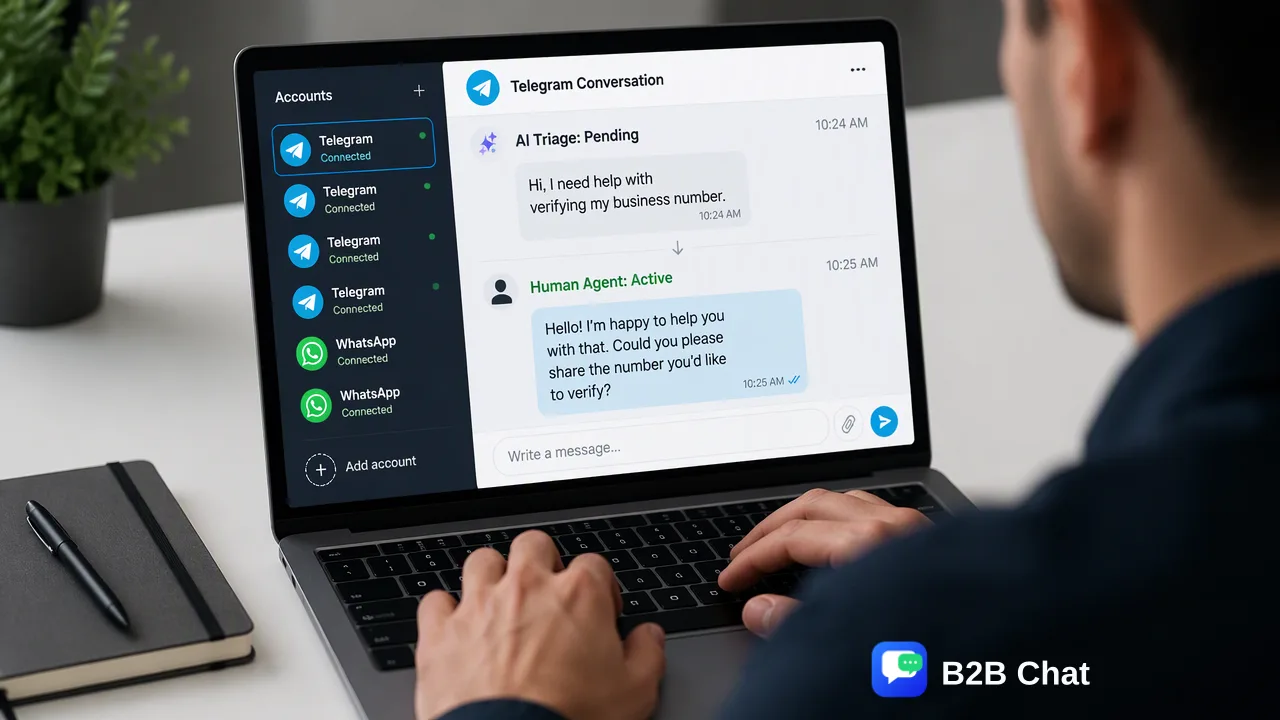
Explore how adopting a messaging-first modern business communication strategy centralizes WhatsApp, Telegram, and LINE, using AI triage and real-time translation to improve response times and team collaboration.
A modern business communication strategy shifts the operational focus from legacy voice channels to instant messaging platforms such as WhatsApp, Telegram, and LINE. By centralizing these disparate social channels into a single workspace, organizations can mitigate channel fragmentation and avoid lead decay. Incorporating AI automation for initial triage, intent detection, and context-aware translation supports front-line responsiveness while preserving conversation context when human agents step in.
The Evolution of Business Communication
For years, standard enterprise outreach relied heavily on traditional telephony and standalone SMS services. While these legacy channels provided standard connectivity, modern customer expectations have gravitated toward conversational interfaces. Operating solely through legacy VoIP and telephone systems frequently creates operational silos that hinder response speed and leave inbound queries sitting in queues. Modern buyers and international accounts prioritize fast, asynchronous messaging over synchronous voice calls. When inquiries arrive across multiple personal or regional apps, uncoordinated teams often suffer from message fragmentation. Adopting a messaging-first framework allows organizations to meet customers on their preferred platforms while organizing inbound volume through systematic operational workflows.
Centralizing Channels for Operational Efficiency
Managing dispersed conversations across disparate chat applications can quickly introduce administrative friction. Support representatives and sales specialists frequently juggle separate logins, split browser windows, or multiple physical devices, increasing the risk of missed inquiries. Centralizing customer interactions into a unified workspace resolves this fragmentation. B2B Chat delivers a dedicated downloadable client for Windows and macOS that allows teams to aggregate and operate multiple WhatsApp, Telegram, and LINE accounts side by side. Operating these accounts from one desktop interface streamlines daily handoffs, standardizes internal response procedures, and helps maintain visibility over ongoing team discussions. | Operational Area | Fragmented Account Management | Centralized Workspace Workflow | | :--- | :--- | :--- | | Account Access | Multiple logins across browser tabs and devices | Unified desktop client on Windows or macOS | | Supported Platforms | Disconnected sessions across individual apps | Simultaneous multi-login for WhatsApp, Telegram, and LINE | | Team Coordination | Isolated conversation logs per representative | Shared inbox visibility and coordinated routing |
The Role of AI in Scaling Conversations
As inbound chat volume scales, organizations must balance rapid response times with thoughtful query resolution. Deploying artificial intelligence within a messaging workflow assists teams by categorizing queries and managing initial contacts before escalating to specialists. Within this framework, AI serves as an automated first-line assistant rather than a total replacement for human staff. The AI customer service layer evaluates inbound customer intent based on conversation context to deliver prompt, relevant first-line replies. This immediate engagement addresses common questions and helps prevent lead decay caused by delayed replies. In addition, global teams often encounter multilingual customer bases. B2B Chat incorporates AI translation that automatically detects languages and translates customer messages across more than 200 languages. Because the translation adapts expression based on conversational context, front-line teams can interpret incoming requests accurately and communicate effectively without requiring dedicated native speakers for every covered market.
Maintaining Context in a Global Environment
One of the primary hazards of omnichannel operations is context loss during transfers. When an automated triage system fails to preserve conversational background, human agents must ask customers to repeat themselves, creating friction and slowing down resolution. A unified messaging environment preserves complete conversation history across channels. When an inquiry shifts from initial AI triage to human handling, or transitions between team members across time zones, the full thread remains intact. Having access to historical interaction records gives representatives the necessary context to address complex requests efficiently, supporting structured collaboration across cross-border marketing and global customer support initiatives.
FAQ
What is a messaging-first communication strategy?
A messaging-first communication strategy prioritizes instant messaging networks such as WhatsApp, Telegram, and LINE as primary customer touchpoints. Rather than forcing interactions into phone queues or email threads, it organizes inbound inquiries into unified chat workflows supported by automation and centralized workspace management.
How does centralizing messaging channels improve team productivity?
Centralizing accounts allows teams to operate multiple messaging profiles across platforms from a single desktop client. This setup reduces the friction of switching between browser tabs or physical devices, helps teams maintain conversation records in one place, and supports smoother internal coordination across global shifts.
Can AI-driven customer service handle complex, multi-language inquiries?
AI customer service assists by interpreting customer intent from incoming messages and conversation context to provide immediate first-line responses. For multilingual inquiries, AI translation automatically detects and translates messages across more than 200 languages, allowing human representatives to review context and manage nuanced cases without language barriers.
Learn More
Choose the product information that fits the next step in your workflow.