Building an Omnichannel Messaging Strategy: Connecting Customer Touchpoints for Seamless Support
Learn how to build an omnichannel messaging strategy across WhatsApp, Telegram, and LINE using centralized workspaces and context-aware AI tools.
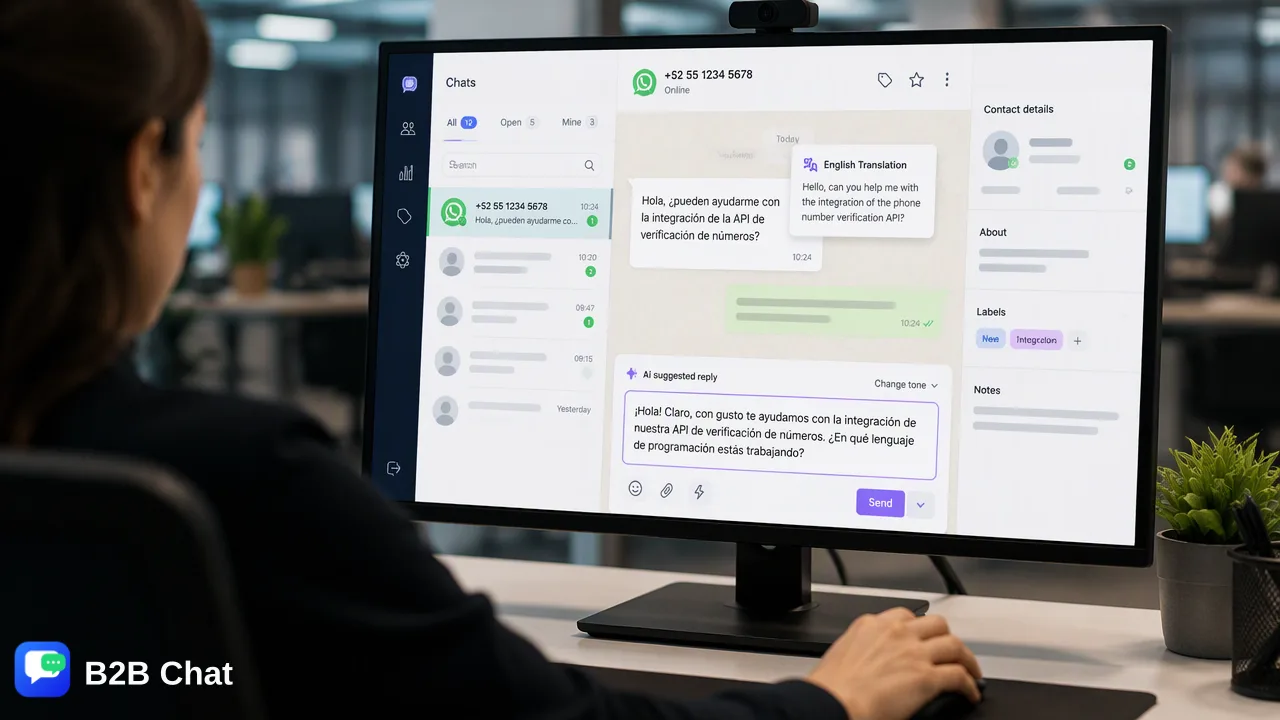
Discover how to build an effective omnichannel messaging strategy across WhatsApp, Telegram, and LINE by centralizing accounts, maintaining conversation context, and applying context-aware AI tools.
An omnichannel messaging strategy centralizes customer conversations across platforms such as WhatsApp, Telegram, and LINE into a unified operational workspace. Rather than managing fragmented inboxes, organizations integrate incoming touchpoints to preserve conversation context, eliminate repetitive channel-switching for support agents, and deploy context-aware AI assistance for first-line inquiries and multilingual translation.
The Strategic Necessity of Centralized Messaging
Modern customer communication often spans multiple touchpoints, ranging from social discovery and website inquiries to conversational messaging apps. When organizations attempt to manage separate conversations across WhatsApp, Telegram, and LINE independently, operational fragmentation quickly develops. Operating siloed channels creates several direct friction points for support teams:
- Channel-Switching Inefficiencies: Agents waste time logging into distinct web portals or rotating through mobile devices to check message queues. * Fragmented Customer Context: Prior interactions, customer preferences, and previous troubleshooting steps remain trapped within single platform histories. * Inconsistent Response Quality: Dispersed queues make it difficult to balance workloads or maintain uniform communication standards across channels. Centralizing messaging into a dedicated communication workspace addresses this fragmentation. Bringing accounts from WhatsApp, Telegram, and LINE into one desktop environment gives teams visibility over message volume, simplifies agent assignment, and establishes a single operational hub for cross-border customer interactions.
Mapping the Continuous Customer Journey Across Touchpoints
A successful omnichannel messaging strategy connects digital touchpoints to create a continuous journey rather than isolated transactions. In cross-border retail and private-domain operations, a customer may discover a product through social media, initiate a pre-sales inquiry on Telegram, and subsequently request order support via WhatsApp or LINE. | Journey Stage | Primary Customer Action | Messaging Operational Goal | | :--- | :--- | :--- | | Discovery & Consideration | Inquires about specifications, availability, or shipping | Fast initial response, intent identification, and product clarification | | Purchase & Confirmation | Finalizes order details and receives order updates | Delivery of tracking information and confirmation receipts | | Post-Purchase Support | Requests troubleshooting, returns, or warranty help | Context-aware issue resolution without requiring repeated explanations | Maintaining conversational continuity across these transitions prevents the customer frustration that occurs when context is lost. When support teams have immediate visibility into previous message threads, they can address recurring questions efficiently, verify transaction details faster, and provide coherent guidance regardless of which channel the customer uses.
Leveraging Context-Aware AI for First-Line Inquiries
Managing high inquiry volumes across multiple channels often stretches support team capacity. While basic chatbots rely on static keyword triggers that can produce disjointed answers, context-aware AI evaluates incoming intent alongside conversation history. Within an integrated messaging workspace, AI customer service tools assist teams by interpreting customer intent from message sequences and drafting first-line responses. This capability supports operational efficiency in two primary ways:
- Routine Inquiry Deflection: Standard questions regarding shipping policies, operating hours, order statuses, and common FAQs receive immediate, structured automated responses. 2. Agent Co-Pilot Assistance: When complex inquiries arrive, the AI suggests context-informed draft responses, allowing human agents to review, personalize, and approve messages before sending. This cooperative workflow scales team throughput during peak volume periods while preserving the human judgment required for sensitive customer issues.
Overcoming Global Language Barriers in Omnichannel Support
Global messaging strategies require overcoming language barriers across international markets. Operating across regions often pairs localized customer preferences—such as LINE in specific Asian markets or WhatsApp across Europe and Latin America—with native language expectations. Integrated AI translation enables cross-border support teams to communicate across more than 200 languages directly within their messaging workspace. The system detects incoming languages automatically and translates customer messages in real time. Rather than producing rigid literal conversions, context-aware translation adjusts expressions based on dialogue context, helping agents deliver natural, culturally appropriate responses. By embedding automated translation into the unified inbox, organizations eliminate the need for third-party translation tools, reducing agent handling times and minimizing translation errors during critical support exchanges.
Operational Best Practices for Implementing a Unified Client
Deploying an omnichannel strategy requires selecting operational tools designed for multi-account management. Organizations implementing unified messaging should adopt several practical setup practices:
- Deploy Dedicated Desktop Workspaces: Utilizing native desktop applications for Windows and macOS provides a stable operational environment compared to browser extensions or web tabs, supporting multi-login across accounts without constant session drops. * Consolidate Multi-Channel Accounts: Aggregate operational profiles across WhatsApp, Telegram, and LINE into a unified client interface. With open port architecture and no artificial account limits, teams can scale channel presence as regional operations expand. * Establish Clear Escalation Workflows: Define explicit boundaries between AI-assisted first-line automation and human intervention. Routing complex disputes or VIP accounts directly to senior support staff prevents automated missteps. * Monitor Public Support Channels for Platform Updates: Social messaging platforms regularly adjust their protocols and security policies. Teams should maintain access to official product update channels and community support groups on Telegram to stay informed on system optimizations.
FAQ
How does account aggregation improve support team efficiency?
Account aggregation allows support agents to monitor and manage multiple WhatsApp, Telegram, and LINE accounts from a single workspace. By eliminating the friction of switching between browser tabs, physical devices, or standalone applications, teams maintain visibility over inbound queues and reduce operational response delays.
How does context-aware AI assist first-line customer service?
Context-aware AI evaluates customer intent using both the immediate incoming message and historical thread context. Rather than providing rigid keyword matches, the system assists teams by generating relevant first-line responses that human agents can review, refine, or escalate based on conversation nuance.
Why is context retention important when customers switch messaging channels?
When customers transition from discovery touchpoints to post-purchase support across different messaging apps, losing context forces them to repeat account details and inquiries. Retaining conversational history across channels supports smoother handoffs, preserves issue continuity, and gives agents the background needed to resolve inquiries effectively.
Learn More
Choose the product information that fits the next step in your workflow.