The Unified Conversation Framework: Integrating Messaging, Voice, and CRM for B2C Teams
Discover how a unified customer conversation platform connects WhatsApp, voice, and CRM systems to eliminate data silos and maintain context for B2C teams.
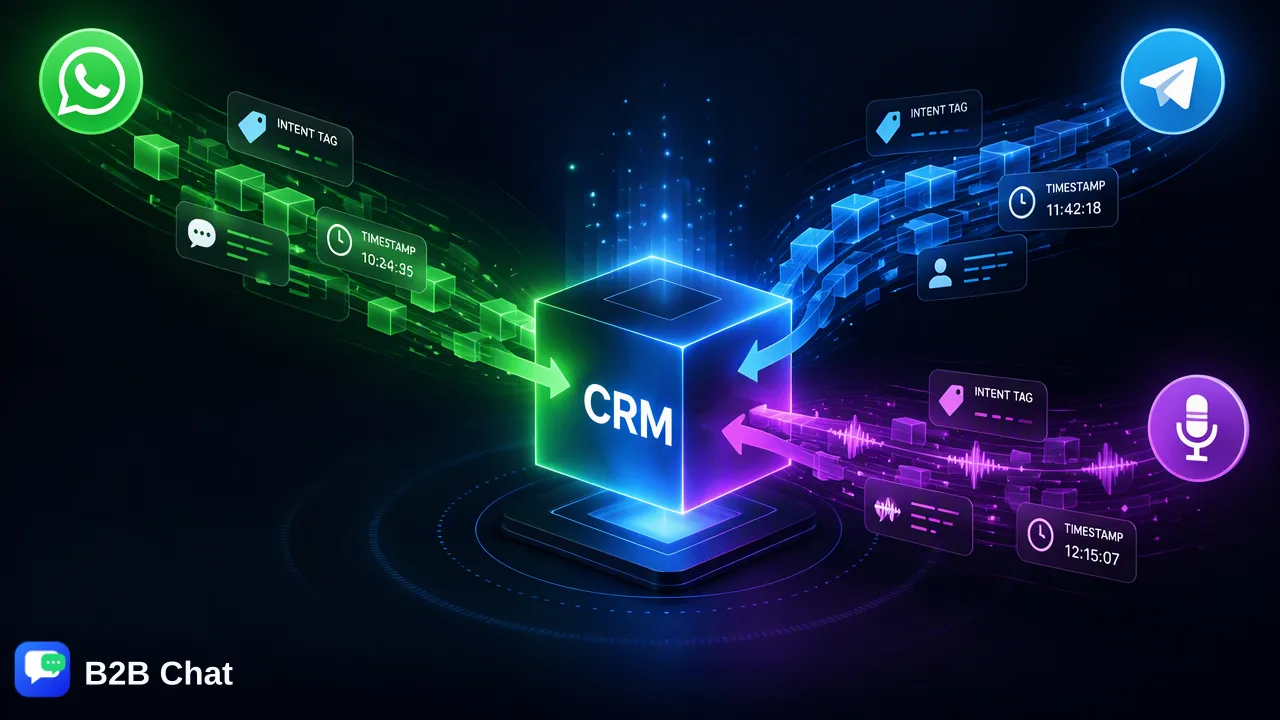
Mid-market B2C teams often face data silos and lost attribution when juggling messaging channels, voice calls, and CRM records across disconnected tools. A unified customer conversation platform centralizes communication channels like WhatsApp, Telegram, and LINE into a shared workspace, connecting interaction management with CRM systems to maintain context and operational continuity.
A unified customer conversation platform integrates fragmented messaging channels—such as WhatsApp, Telegram, and LINE—and customer interaction touchpoints into a centralized workspace connected to core CRM systems. By separating interaction management from static data storage, mid-market B2C organizations resolve communication silos, preserve customer conversation context across channels, and ensure team interactions are captured systematically. Combining account aggregation with AI-assisted intent interpretation helps support teams streamline triage, assist first-line replies, and maintain operational efficiency across global markets.
The Operational Cost of Fragmented Communication Channels
Mid-market B2C organizations frequently encounter operational friction when scaling customer communications across disparate channels. When customer support and sales teams manage WhatsApp, Telegram, LINE, and traditional voice calls across distinct applications or separate mobile devices, operational attribution breaks down. Information captured during a voice interaction often fails to appear in a chat thread, while incoming chat histories remain locked within individual agent logins or local device storage. This channel fragmentation creates significant structural challenges:
- Attribution Blind Spots: Marketing and operational teams struggle to trace which campaign, outreach effort, or prior interaction initiated an incoming conversation when messaging tools operate independently. * Context Gaps: Customers must restate account details, previous order references, or support histories whenever switching channels from a voice call to a social chat app. Without an integrated operational layer, organizations experience higher administrative overhead, slower triage speeds, and inconsistent response patterns across their customer bases.
CRM Storage vs. Interaction Management: Understanding the Separation
A common architectural mistake in customer-facing operations is expecting a standard CRM database to serve as an effective messaging interface. While CRMs excel at structured data persistence, they are not naturally built for the rapid, asynchronous cadence of modern chat applications. Establishing an effective communication stack requires recognizing the complementary roles of both layers:
| Functional Dimension | Customer Relationship Management (CRM) | Customer Conversation Platform |
|---|---|---|
| Core Purpose | System of record for static profile and transactional data | Interaction workspace for real-time customer dialogues |
| Data Structure | Relational tables, contact cards, deal pipelines, custom fields | Active message threads, session states, multimedia feeds |
| Channel Scope | Database records updated via batch syncs or form fills | Direct multi-account aggregation across WhatsApp, Telegram, LINE |
| Operational Focus | Historical auditing, lifecycle reporting, lead scoring | Real-time triage, AI-assisted first-line replies, contextual translation |
| A CRM holds the profile history, while the conversation platform governs the live communication session. A unified framework bridges these two environments so that real-time interactions immediately inform recorded customer records without requiring agents to manually copy and paste details between systems. |
The Three-Layer Unified Conversation Architecture
Integrating multi-channel messaging, voice touchpoints, and core data stores into an organized framework involves three distinct operational layers: channel aggregation, automated triage, and synchronized CRM write-back. ### 1. Messaging and Voice Channel Aggregation The base layer aggregates disparate external communication endpoints into a unified workspace. For social messaging, solutions like B2B Chat provide account aggregation across WhatsApp, Telegram, and LINE within a dedicated desktop client environment for Windows and macOS. By bringing multi-account logins into a central desktop workspace, agents can monitor incoming messages across several platforms simultaneously without switching between web browsers, mobile phones, or distinct native apps. ### 2. AI-Driven Triage and Contextual Assistance The middle layer processes incoming customer inquiries before or alongside human agent assignment. By analyzing conversation context, AI customer service capabilities interpret customer intent to assist first-line responses. Furthermore, global B2C operations often encounter language barriers across regional accounts. Integrated AI translation with automatic language detection across 200+ languages adjusts translations based on context, supporting agents in reviewing and resolving inquiries from diverse international audiences. ### 3. CRM Data Synchronization and Record Attribution The final layer maintains continuity by connecting active conversation states back to centralized profile databases. Capturing interaction timestamps, channel origins, intent tags, and resolution summaries ensures that customer timelines remain current across the organization.
Maintaining Conversation Context Across Channels and Touchpoints
When a customer initiates an inquiry via WhatsApp, follows up through a voice call, and later requests documentation via Telegram or LINE, preserving context is essential for operational continuity. In fragmented environments, agents operate blind, asking customers to repeat order numbers or issue descriptions. To maintain continuity across channels, teams implement specific structural workflows:
- Persistent Identifier Mapping: Link distinct social identifiers—such as a WhatsApp phone number, Telegram handle, or LINE user account—to a singular master contact identity in the CRM. * Unified Session Timeline: Maintain an integrated chronological timeline where voice call logs, call notes, and social chat histories appear in a shared sequence accessible to servicing staff. * Context Preservation for Handoffs: Ensure that intent tags and conversation histories established during automated first-line triage remain visible when transferring a thread to a specialized human representative. Centralizing multi-account management within an integrated client workspace allows agents to review previous interactions directly alongside active chats, avoiding context drops during channel transitions.
Operational Shifts: Moving from Manual Assignment to AI-Assisted Workflows
Scaling B2C customer operations requires evolving beyond manual message triage and uncoordinated account monitoring. Traditional models rely on agents manually scanning multiple inboxes to pick tickets, resulting in unbalanced workloads and delayed responses during traffic surges. Transitioning to an AI-assisted conversation model shifts operations in three major areas:
- Intent-Based Routing: Instead of round-robin distribution based solely on agent availability, incoming messages are categorized by intent—such as billing inquiries, order tracking, or technical support—using context-aware AI parsing to direct threads to appropriate queues. 2. First-Line Response Drafting: Rather than relying exclusively on static canned responses, AI customer service features interpret incoming queries within their conversational context to draft relevant first-line replies, which human operators can review or dispatch automatically. 3. Multilingual Inquiries: In global markets, language differences often create communication bottlenecks. Automatic language detection and context-sensitive translation across 200+ languages assist agents in handling international customer messages directly from their desktop workspace. This combination of multi-account aggregation and AI-supported intent triage reduces operational friction, helping teams maintain structured communication workflows without expanding manual administrative overhead.
FAQ
Why is a unified customer conversation platform necessary for B2C teams?
Operating messaging channels like WhatsApp, Telegram, or LINE across independent devices or browser tabs creates disconnected data silos. A unified platform consolidates account management into a single interface, helping teams maintain interaction history, support clear assignment, and prevent fragmented context across customer touchpoints.
What is the difference between a CRM and a conversation platform?
A CRM acts as an underlying system of record designed for static profile data, lifecycle stages, and deal tracking. In contrast, a conversation platform functions as an interaction management workspace built for real-time messaging, multi-account handling, intent detection, and live agent workflow coordination.
How does AI triage support multi-channel customer service?
AI customer service features interpret incoming message context to identify intent, assisting teams with automated first-line responses. Coupled with automatic language detection and translation across 200+ languages, it helps agents manage diverse incoming inquiries efficiently.
Learn More
Choose the product information that fits the next step in your workflow.