What Is a VoIP Number? Understanding the Difference Between VoIP and Mobile Numbers
Learn what a VoIP number is, how it differs from a mobile number, and why line type informs business communication and risk review workflows.
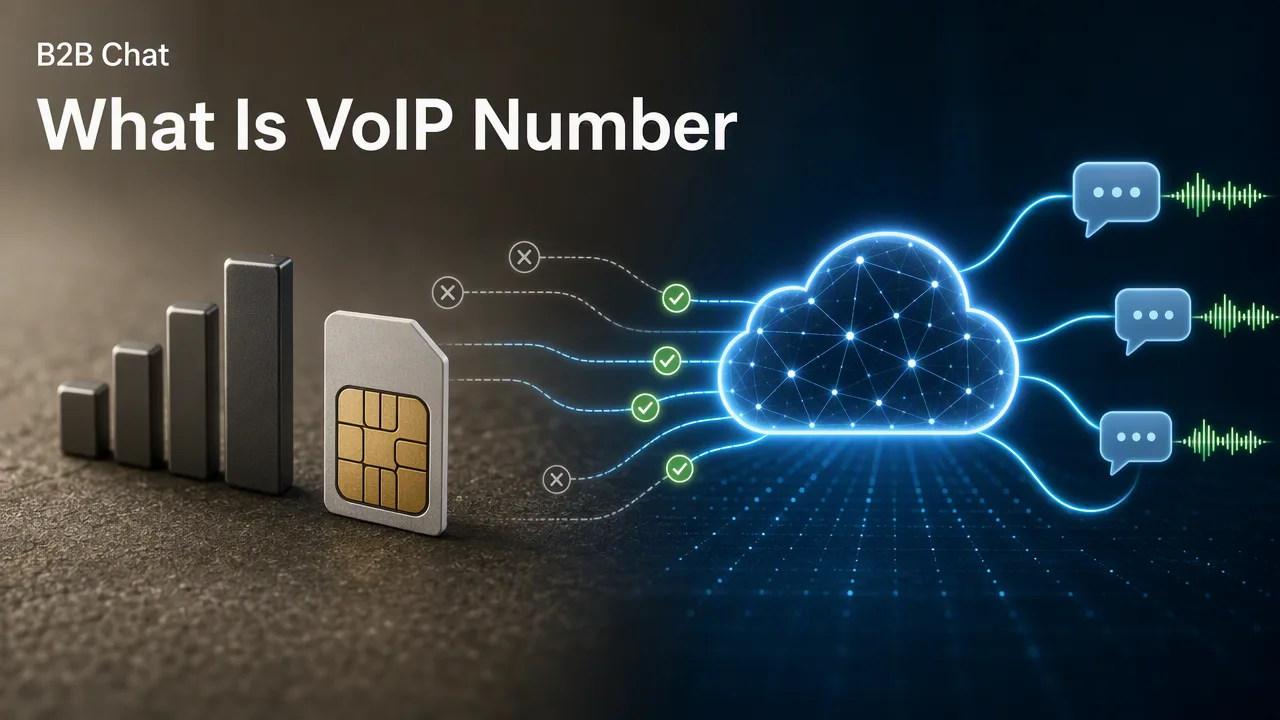
Learn what a VoIP number is, how it differs from a traditional mobile number, and why identifying line types helps businesses inform communication and risk review workflows.
A VoIP (Voice over Internet Protocol) number is a virtual phone number that uses Voice over Internet Protocol technology to transmit voice and data over the internet instead of traditional copper-wire telephone lines. While mobile numbers are tied to a specific SIM card and a cellular network provider, VoIP numbers are software-based and operate entirely over an internet connection. Understanding what is a VoIP number helps cross-border ecommerce and global marketing teams categorize incoming traffic and inform customer-defined review processes.
What Is a VoIP Number?
Voice over Internet Protocol (VoIP) technology assigns a telephone number to a user or device without requiring a physical circuit-switched public switched telephone network (PSTN) connection. Because VoIP numbers are virtual and operate over the internet, they use internet data to transmit voice and messages as digital packets. This software-based approach means a single number can be accessed from multiple compatible devices, provided there is an active internet connection. For private-domain traffic and customer-support teams, these virtual numbers offer flexibility when scaling operations across different regions. Instead of provisioning local hardware in every target market, organizations can deploy virtual lines to establish a local presence, supporting international outreach and customer service workflows.
VoIP vs. Mobile Numbers: Key Differences
The primary distinction between these two line types lies in their underlying infrastructure. Mobile numbers are linked to cellular networks and physical SIMs, typically associating them with a physical device and a verified subscriber identity. In contrast, VoIP numbers are virtual and internet-dependent.
| Feature | VoIP Number | Mobile Number |
|---|---|---|
| Infrastructure | Internet-based data transmission | Cellular network and physical SIM card |
| Device Dependency | Software-based; accessible on multiple devices | Tied to a specific physical device and SIM |
| Location | Location-independent | Tied to regional cellular coverage |
| Verification Signal | Often indicates a virtual or software-based user | Typically associated with a traditional subscriber |
| Understanding these differences supports teams in structuring their communication channels. Recognizing whether a message originates from a cellular device or a virtual application helps operators evaluate the context of incoming messages and adjust their response strategies accordingly. |
Why Line Type Matters for Business Workflows
Identifying line types helps businesses categorize incoming traffic and inform customer-defined review processes. Because VoIP numbers can be generated quickly and operate without physical SIM cards, they often present a different risk profile compared to traditional mobile lines. Recognizing a number as a VoIP line does not mean it is inherently fraudulent; rather, it adds a risk signal that supports review and may warrant additional checks. Global marketing and support teams use line type data as one input alongside other checks to route conversations, apply appropriate screening, and prioritize human review for high-value interactions. For example, a sudden influx of registrations or support requests from virtual numbers might prompt a team to implement step-up verification or route those specific interactions to a specialized review queue, helping maintain the integrity of private-domain traffic.
Centralize Accounts and Handle Multilingual Conversations
When managing communications across various line types, businesses often need to centralize conversations and reduce tool switching. B2B Chat provides a downloadable client for Windows and macOS that supports WhatsApp and Telegram account management from one place. This account aggregation and multi-login workflow supports teams in connecting and operating multiple accounts without stated port quantity limits or usage-duration limits. For cross-border ecommerce, handling incoming messages from diverse global numbers requires robust language support. B2B Chat features AI Translation that automatically detects and translates customer messages across 200+ languages. The translation expression is adjusted based on conversation context, helping teams maintain accurate and professional communication regardless of the customer's location or line type. This context-aware translation supports operators in understanding nuanced inquiries from international users, reducing the friction typically associated with multilingual customer service.
Assist First-Line Replies and Route Human Review
Scaling customer support across multiple WhatsApp and Telegram accounts requires efficient triage. B2B Chat includes Smart Customer Service capabilities designed to assist automated first-line responses. The AI Customer Service tool interprets customer intent from incoming messages and conversation context. By understanding the intent behind a message, the system assists first-line replies and helps route complex issues to the appropriate human review queue. Both AI Translation and Smart Customer Service are available on a per-request basis, helping teams manage usage as they scale their global support operations. Public support paths, including Telegram support and official update channels, provide ongoing guidance for optimizing these workflows. Integrating these AI capabilities helps support teams handle high volumes of inquiries from both mobile and virtual numbers efficiently.
FAQ
Can a VoIP number receive SMS?
Yes, many VoIP numbers can receive SMS messages, provided the service provider supports text messaging. However, because VoIP numbers transmit messages over the internet rather than a cellular network, some platforms and verification systems may restrict or flag SMS delivery to virtual lines. This distinction helps teams inform internal decisions regarding which numbers to accept for specific workflows.
Are VoIP numbers less secure than mobile numbers?
This flexibility makes them easier to provision. Consequently, businesses often treat VoIP numbers as a distinct signal that can be one input alongside other checks during customer-defined review processes.
How can businesses use line type information in their communication strategy?
Identifying whether a contact uses a VoIP or mobile number helps businesses categorize incoming traffic and inform customer-defined review processes. Teams can use this information to route conversations, apply appropriate screening, and prioritize human review. When combined with tools like B2B Chat for WhatsApp and Telegram account management, line type data supports a more organized and context-aware global support strategy.
Do virtual numbers require specific hardware to operate?
No, virtual numbers do not require dedicated physical telephone hardware or copper-wire connections. Because they operate over the internet, they function through software applications on existing devices such as desktop computers, laptops, or smartphones. This software-based approach supports remote teams in managing communications without provisioning local hardware in every target market.