How to Maintain WhatsApp Business Account Health and Avoid Bans
Learn best practices for WhatsApp Business account compliance, maintaining account health, managing opt-ins, and avoiding messaging bans.
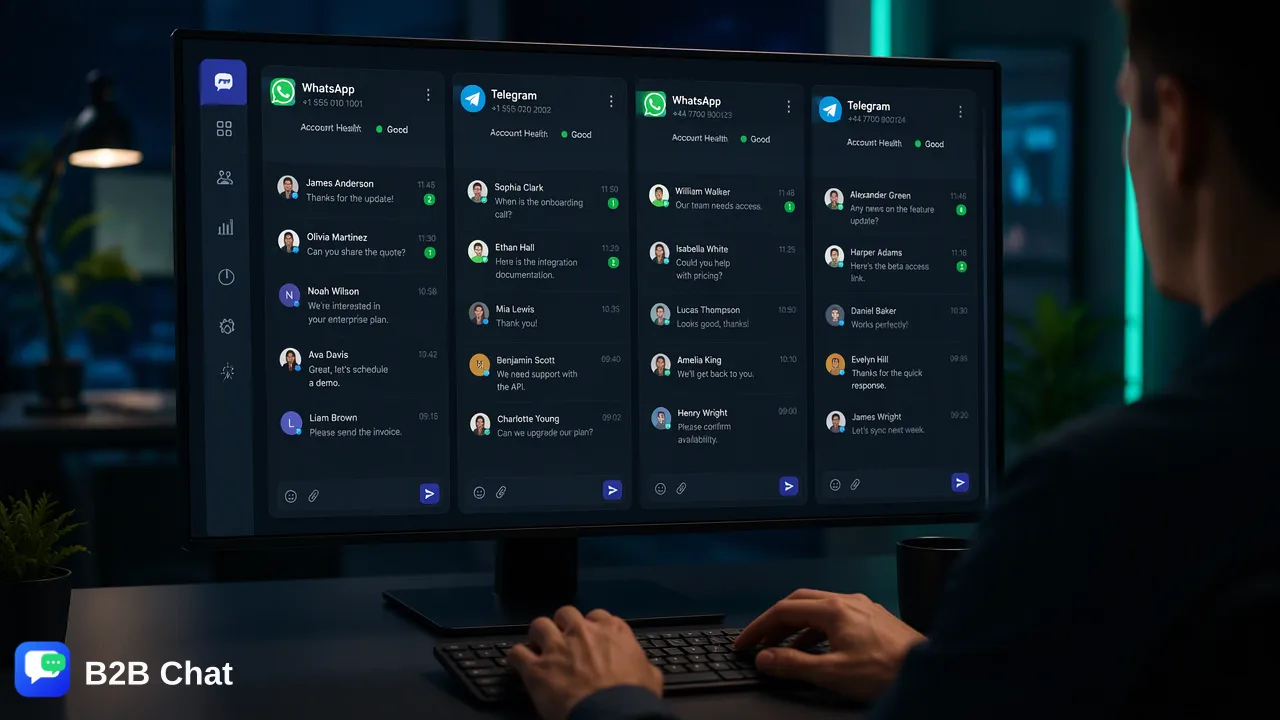
Maintaining WhatsApp Business account compliance requires strict adherence to Meta's policies regarding user consent, message quality, and engagement-based delivery. Learn how managing opt-ins, optimizing messaging context, and centralizing account operations help teams support account longevity and avoid restrictions.
Maintaining a healthy WhatsApp Business account requires strict adherence to Meta's policies regarding user consent, message quality, and engagement-based delivery. To reduce the risk of account restrictions or bans, organizations must collect explicit, verifiable opt-ins before sending outbound messages, honor opt-outs immediately, and maintain high relevance across all conversations. Centralizing account management and utilizing AI-assisted communication tools support consistent messaging quality and contextual accuracy across distributed teams.
The Foundation of Account Health: Policy and Consent
Maintaining sustainable WhatsApp Business account compliance begins with clear consent mechanisms. Meta requires organizations to secure explicit, verifiable opt-ins from customers prior to sending proactive notifications, updates, or marketing messages. An opt-in cannot be assumed through third-party contact lists, prior generic interactions, or pre-checked website consent boxes. Organizations must clearly disclose the business name, specify the categories of messages that will be received, and obtain affirmative confirmation from the user. Equally critical to account standing is immediate opt-out handling. When recipients request to unsubscribe, organizations must respect that preference without friction or delay. Failing to process an opt-out leads recipients directly to WhatsApp's native blocking and reporting controls. Because recipient feedback directly informs account health ratings, unaddressed opt-out requests represent one of the fastest paths to template rejection and account restrictions.
Engagement-Based Delivery and Message Quality
Meta utilizes an engagement-based delivery model that links broadcast reach and account standing directly to recipient reactions. When recipients consistently open, read, and positively respond to outbound messages, an account maintains a high quality rating. Conversely, when users ignore messages, delete conversations, or submit negative feedback, the account quality rating drops. To support account stability, messaging workflows should prioritize high relevance and clear formatting:
| Quality Factor | Recommended Practice | Operational Risk Avoided |
|---|---|---|
| Contextual Relevance | Tailor messages to explicit user inquiries and transactional milestones. | High unsubscribe and report rates from unwanted marketing blasts. |
| Message Timing & Frequency | Distribute communications logically; avoid aggressive recurring broadcasts. | User fatigue resulting in rapid account blocking. |
| Clear Action Items | Keep templates concise with clear options for customer response or opt-out. | Ambiguity causing users to flag messages as spam. |
| Maintaining message quality requires ongoing review of template performance. When messaging tiers or template ratings decline, organizations should immediately pause affected campaigns, evaluate recent dispatch lists, and refine content to match recipient expectations. |
Leveraging Centralized Management for Compliance
For global support and marketing teams, managing operations across distributed regions can create compliance blind spots. Operating accounts across uncoordinated devices makes it difficult to maintain unified consent standards or track individual account quality scores. Utilizing a dedicated workspace such as B2B Chat provides centralized operational support. Available as a downloadable client for Windows and macOS, B2B Chat supports the aggregation and multi-login management of multiple WhatsApp, Telegram, and LINE accounts from a unified workspace. This multi-account framework helps teams maintain consistent communication standards, oversee operator conduct, and standardize operational workflows across global markets. In addition to workspace centralization, intelligent message handling assists in maintaining response relevance. B2B Chat includes AI Customer Service capabilities that interpret customer intent from incoming messages and conversational context. By understanding context, automated first-line assistance delivers relevant, targeted information to customers. Context-aware handling helps teams avoid generic, misaligned automated messages that often prompt user frustration and spam reports.
Navigating Industry-Specific Restrictions
Beyond general engagement standards, organizations must comply with platform-specific acceptable use and commerce policies. Meta enforces strict prohibitions against messaging related to specific industries, goods, and services. Attempting to use business messaging for restricted categories—such as unauthorized pharmaceuticals, weapons, gambling, tobacco, or misleading financial schemes—results in immediate account suspension regardless of historical engagement levels. Organizations must review the WhatsApp Commerce Policy and Business Messaging Policy to confirm their products, transactional flows, and customer notifications fall within approved categories. Where policy boundaries require clarification, businesses should align internal compliance guidelines and train customer-facing teams to verify that outbound campaigns adhere strictly to platform guidelines.
FAQ
What are the primary triggers for a WhatsApp Business account ban?
WhatsApp Business account restrictions and bans typically stem from high user report and block rates, sending unsolicited bulk or broadcast messages without verifiable consent, failing to honor immediate opt-out requests, and violating platform commerce or business policies. When recipients flag incoming messages as spam, Meta's automated systems evaluate account quality metrics, which can lead to template pausing, messaging tier downgrades, or full account suspension.
How can AI tools assist in maintaining high message quality?
AI customer-service tools assist teams by interpreting customer intent from incoming inquiries and conversation context. This allows organizations to provide context-aware, relevant first-line responses instead of sending generic, misaligned automated replies that risk frustrating recipients and generating spam complaints.
Why is centralized account management important for compliance?
Operating multiple messaging channels across fragmented devices or unmanaged endpoints increases the risk of disjointed messaging, inconsistent consent tracking, and uncoordinated outbound campaigns. Centralizing multiple accounts within a single workspace helps teams maintain unified communication standards, monitor message consistency, and apply team-wide operational guidelines.
How should businesses handle user opt-outs to protect account health?
Organizations must process opt-out requests immediately and update internal records across all connected workflows. If a contact indicates they no longer wish to receive communications, continuing to send marketing or notification templates dramatically increases the likelihood of immediate user blocking and spam reporting, which directly depresses account quality scores.
Learn More
Choose the product information that fits the next step in your workflow.