Standardizing Your First Impression: Best Practices for WhatsApp Business Greeting Messages
Discover WhatsApp Business greeting message best practices. Learn how automated greetings and AI assistance set clear customer expectations.
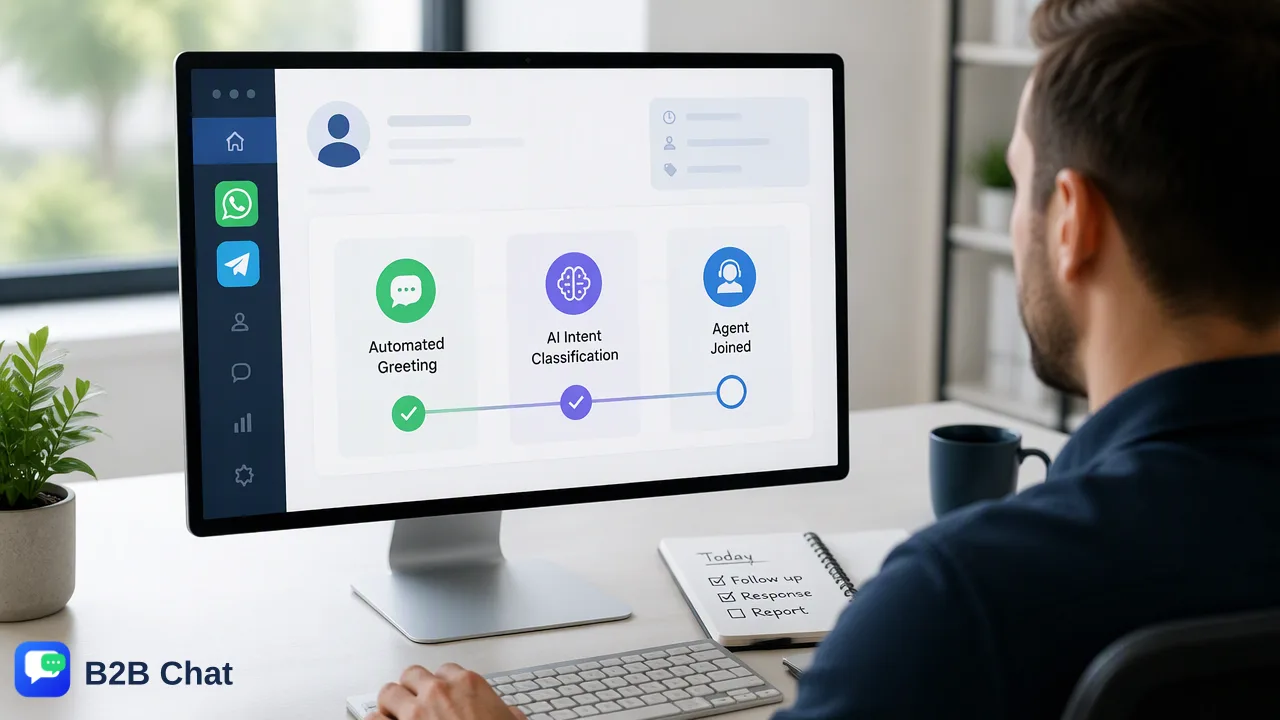
Learn essential WhatsApp Business greeting message best practices to establish brand identity, clarify response expectations, and enhance first-line customer support with context-aware AI automation.
WhatsApp business greeting message best practices focus on delivering immediate clarity, setting accurate response expectations, and establishing a professional brand tone from the very first inbound touchpoint. An effective greeting message welcomes customers, identifies the business entity, outlines typical operating hours or expected wait times, and provides direct navigational paths to self-service catalogs or core resources. When combined with AI customer service automation capable of interpreting conversation context and message intent, initial greetings transition from rigid static notices into helpful, context-aware first-line assistance that supports support teams across daily operations.
The Strategic Role of the Initial WhatsApp Greeting
First impressions establish the baseline for customer confidence across direct messaging channels. When an inbound customer contacts a business on WhatsApp, the initial automated greeting confirms that the outreach was received by an authentic, organized company. This immediate acknowledgement validates the channel's legitimacy, sets customer expectations, and reinforces brand identity. Unstructured or delayed initial responses often lead to customer uncertainty, duplicated outreach across alternative channels, or immediate abandonment. Standardizing greeting copy across brand touchpoints establishes a predictable support experience. By defining whether human operators are currently online, outlining typical queue wait times, and offering preliminary navigation, the greeting message provides structured reassurance during the moments before a live agent joins the conversation.
Greeting Versus Away Messages: Structural Differences
A common operational misstep in conversational service is treating greeting messages and away messages as interchangeable notifications. Each automated message type serves a specific trigger and communication objective. - Greeting Messages: Configured to trigger upon an inbound customer's first interaction or when a conversation reopens. Their primary purpose is welcoming the sender, introducing organizational identity, and asking clarifying questions to identify why the customer reached out. - Away Messages: Configured to deploy during non-operational hours, public holidays, or scheduled team training intervals. Their primary objective is managing customer expectations regarding personnel absence, providing operating hours schedules, and pointing to emergency documentation or self-serve knowledge bases. Maintaining separate, purpose-built automations ensures that customers reaching out during active operating hours receive helpful orientation, while off-hours contacts understand realistic timeframes before team review takes place.
Best Practices for Message Tone, Clarity, and Direct Pathways
Effective greeting messages strike a balance between professional courtesy and practical efficiency. Because mobile messaging interfaces favor scannability, greetings must communicate core details without forcing the recipient to scroll through lengthy text walls. To construct an optimal greeting framework, organizations should incorporate specific structural components:
| Component | Operational Objective | Implementation Best Practice |
|---|---|---|
| Brand Greeting & Identity | Confirms business legitimacy | Open with a clear company name greeting and a concise welcome phrase. |
| Expectation Management | Clarifies wait times and availability | State whether an agent is reviewing the queue or when the team will reply. |
| Self-Service Navigation | Facilitates immediate inquiry resolution | Link directly to an updated product catalog, status dashboard, or FAQ library. |
| Intent Prompt | Prepares context for agent triage | Invite the customer to share order identifiers, product queries, or account details. |
| Maintaining a consistent voice across all automated touchpoints helps global marketing, private-domain traffic, and cross-border ecommerce operations establish brand credibility while keeping customer inquiries organized. |
Scaling First-Line Support with AI-Driven Automation
Static greetings establish presence, but scaling support teams often face volume challenges when handling numerous incoming conversations across global territories. Integrating AI customer service into initial messaging workflows elevates the customer experience by interpreting customer intent and evaluating conversation context from the opening message. Rather than serving a generic reply to every inquiry, context-aware automation evaluates whether an incoming query relates to order tracking, product specifications, billing, or general discovery. The AI system can assist by generating relevant automated first-line responses, answering straightforward questions, or directing users to catalog resources tailored to their expressed interest. This intent-focused triage provides immediate contextual context for support personnel, supporting operational prioritization without claiming autonomous replacement of human agents. For organizations coordinating multi-channel workflows across WhatsApp, Telegram, and LINE, centralizing these interactions within unified workspaces—such as dedicated desktop clients available for Windows and macOS—helps teams maintain consistent greeting standards and manage multiple accounts from a single operational environment.
FAQ
What is the recommended length for a WhatsApp Business greeting message?
Greeting messages should remain brief, readable, and focused on immediate customer orientation. A standard message between two and four sentences provides sufficient room to introduce the organization, establish current response expectations, and direct the customer to self-service resources or catalog links without cluttering the mobile chat screen.
How do greeting messages differ from away messages in business messaging?
Greeting messages welcome customers on initial outreach or when a new conversation starts, orienting the customer to the channel and initiating the dialogue. Away messages are scheduled for designated off-hours or unexpected team absences, specifically informing inbound contacts that human agents are currently unavailable and specifying when live personnel will return.
Should organizations include self-service links in initial greeting messages?
Including a direct self-service link or catalog prompt is highly effective when customers seek immediate answers. Greeting messages can direct inquiries toward structured resource hubs, documentation portals, or product catalogs, helping users review standard information independently while their conversation enters the team queue.
How does AI customer service assist with automated initial greetings?
AI customer service assists by analyzing message context and interpreting incoming intent from the very first contact. Instead of relying solely on one static script, context-aware automation helps draft or deliver relevant first-line responses, routing inquiries toward catalog resources or preparing context for human review.
Learn More
Choose the product information that fits the next step in your workflow.