What Is WhatsApp Customer Service? Operational Guide for Teams
Learn what WhatsApp customer service is, how two-way support conversations differ from marketing broadcasts, and how teams manage multi-account workflows.
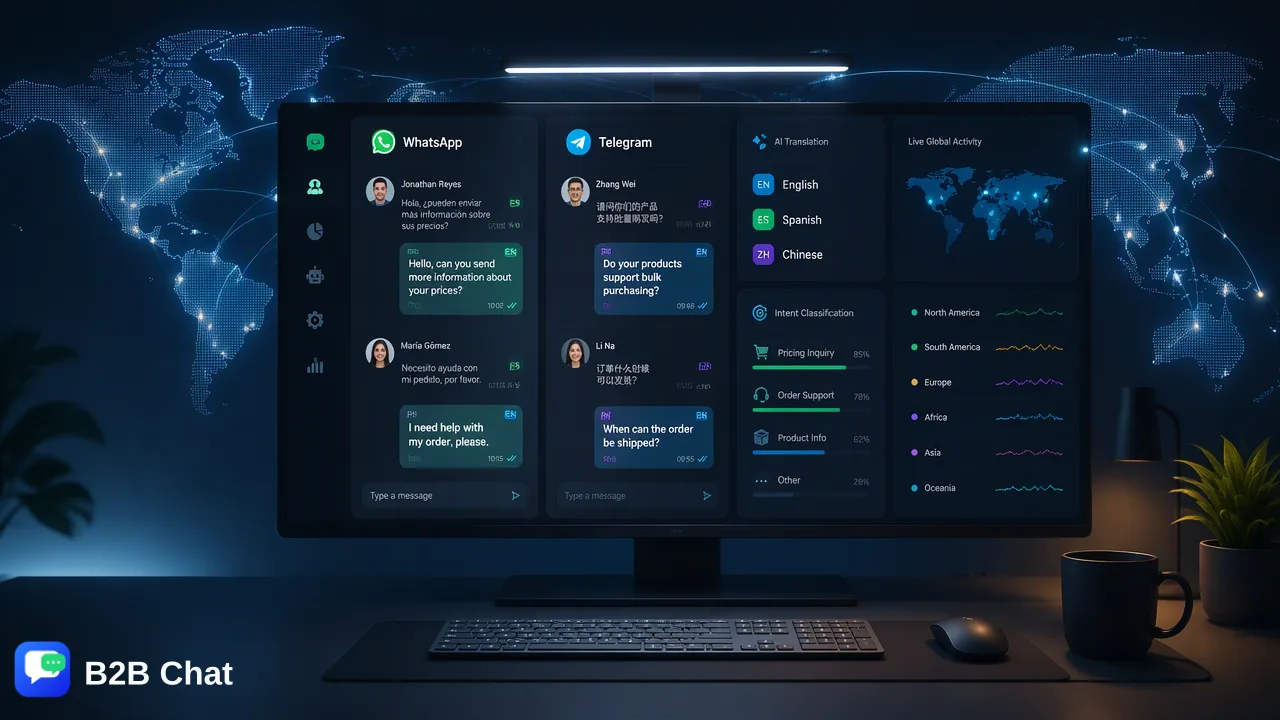
WhatsApp customer service is the operational practice of managing two-way, inbound business-to-customer conversations on WhatsApp using centralized workspaces, context-aware translation, and intent-based first-line assistance.
WhatsApp customer service is the operational practice of managing business-to-customer communications through the WhatsApp platform to address inquiries, troubleshoot issues, and guide buyers. Rather than relying on static notifications, it centers on two-way, inbound conversations supported by centralized account workspaces, contextual first-line automated responses, and multilingual translation tools designed to maintain consistent communication across global markets.
Defining WhatsApp Customer Service
WhatsApp customer service is the structured management of direct customer communications across WhatsApp accounts to handle pre-sale questions, technical support, order status checks, and account inquiries. As customer communication shifts toward direct messaging channels, organizations deploy customer service workflows on WhatsApp to meet users where they already communicate. Unlike email queues that experience multi-hour latency or rigid phone trees that require synchronized scheduling, messaging-based customer service combines the responsiveness of live communication with the flexibility of asynchronous messaging. Customers can initiate a request, step away from their mobile devices, and resume the conversation seamlessly. For organizations, managing this channel effectively requires moving beyond individual mobile handsets to structured workspaces that centralize conversations, support multiple agents, and maintain conversation history across team shifts.
Conversations vs. Broadcasts: Understanding the Difference
A common operational misunderstanding is treating customer service and broadcast messaging as the same operational function. While both activities take place on the same underlying platform, their objectives, data flows, and team structures differ fundamentally. | Operational Dimension | WhatsApp Customer Service | WhatsApp Broadcasts | | :--- | :--- | :--- | | Initiation Direction | Inbound from the customer | Outbound from the organization | | Interaction Model | Two-way, interactive dialogue | One-to-many outbound notification | | Primary Objective | Inquire, troubleshoot, and resolve issues | Announce promotions, updates, or news | | Context Handling | Evaluates message history and customer intent | Static, uniform message payload | | Staffing Needs | Dedicated support reps and intent-based triage | Campaign planners and marketing operations | Broadcast campaigns push outbound announcements to contact lists. In contrast, customer service handles inbound user requests where each interaction introduces specific context, customer history, and unique support intent. Organizations that mix these workflows on the same operational lines risk misrouting urgent customer issues into unattended campaign queues, leading to missed messages and degraded customer experiences.
Core Components of Modern Support Workflows
Managing enterprise customer service across WhatsApp accounts requires foundational infrastructure to maintain operational consistency at scale. Modern support teams structure their workflows around three core components:
- Centralized Account Aggregation and Multi-Login Operating individual messaging accounts across physical phones creates data fragmentation, operational bottlenecks, and administrative security risks. Teams use desktop workspaces available on Windows and macOS to connect and operate multiple accounts in one place. Centralizing incoming chats into a single environment reduces tool switching and allows teams to distribute incoming volume across support personnel. 2. Intent Understanding and First-Line Assistance High-volume support environments experience repetitive routine inquiries regarding order status, store hours, return procedures, or basic onboarding. Automated AI customer service tools interpret customer intent from incoming messages and conversational context. These tools assist support agents by providing automated first-line replies or suggesting relevant responses for human review, preventing customer backlogs during peak traffic periods. 3. Context-Aware Multilingual Translation Global businesses frequently manage customer inquiries from international markets with diverse language requirements. AI translation engines supporting more than 200 languages automatically detect customer language and translate incoming inquiries in real time. Because idiomatic expressions and regional phrasing vary, modern systems adjust translation expression based on conversational context, allowing support representatives to collaborate with global customers accurately.
Operational Considerations for Teams
Before rolling out or scaling customer service on WhatsApp, operational leaders should evaluate several practical questions to ensure their technical setup matches operational reality:
- Account Architecture: How many accounts will the organization operate? Teams supporting multiple regional markets or product lines often require multi-account management within a unified client rather than fragmented web sessions. - Automation Boundaries: What percentage of inbound volume can be addressed with automated first-line responses, and when must a conversation escalate to a live agent? Automating routine intent identification helps triage inquiries, but complex complaints or high-touch transactions require seamless human oversight. - Cross-Border Language Strategy: Does the support staff possess native language fluency for every target geography, or will operations rely on context-aware AI translation across diverse language sets? - Operating Environments: Will the support team work from standardized desktop environments? Deploying client software on Windows or macOS ensures operational stability and consistent access to multi-login workspaces. Addressing these operational considerations ensures teams structure their WhatsApp customer support workflows for scalable communication, reliable triage, and consistent service delivery.
FAQ
What is the difference between WhatsApp marketing broadcasts and customer service?
WhatsApp marketing broadcasts are one-directional push campaigns sent to lists of recipients to promote products or distribute updates. In contrast, WhatsApp customer service is an inbound, intent-driven dialogue where a customer initiates an inquiry or issue, requiring contextual answers, continuous conversational history, and resolution support.
How does AI assist in WhatsApp customer service?
AI assists customer support workflows by analyzing incoming message context and customer intent to generate automated first-line replies. It also provides automatic language detection and context-aware translation across more than 200 languages, allowing support representatives to review and handle conversations without language barriers.
Can teams manage multiple WhatsApp accounts from one workspace?
Yes, dedicated customer messaging workspaces allow support teams to connect and operate multiple messaging accounts within a single downloadable desktop client, helping eliminate the need to switch between individual mobile devices or browser windows.
Learn More
Choose the product information that fits the next step in your workflow.