A Guide to WhatsApp Marketing Messages Lite API: Streamlining Promotional Campaigns
Learn how WhatsApp Marketing Messages Lite API simplifies promotional messaging and how teams can manage high-volume customer conversations efficiently.
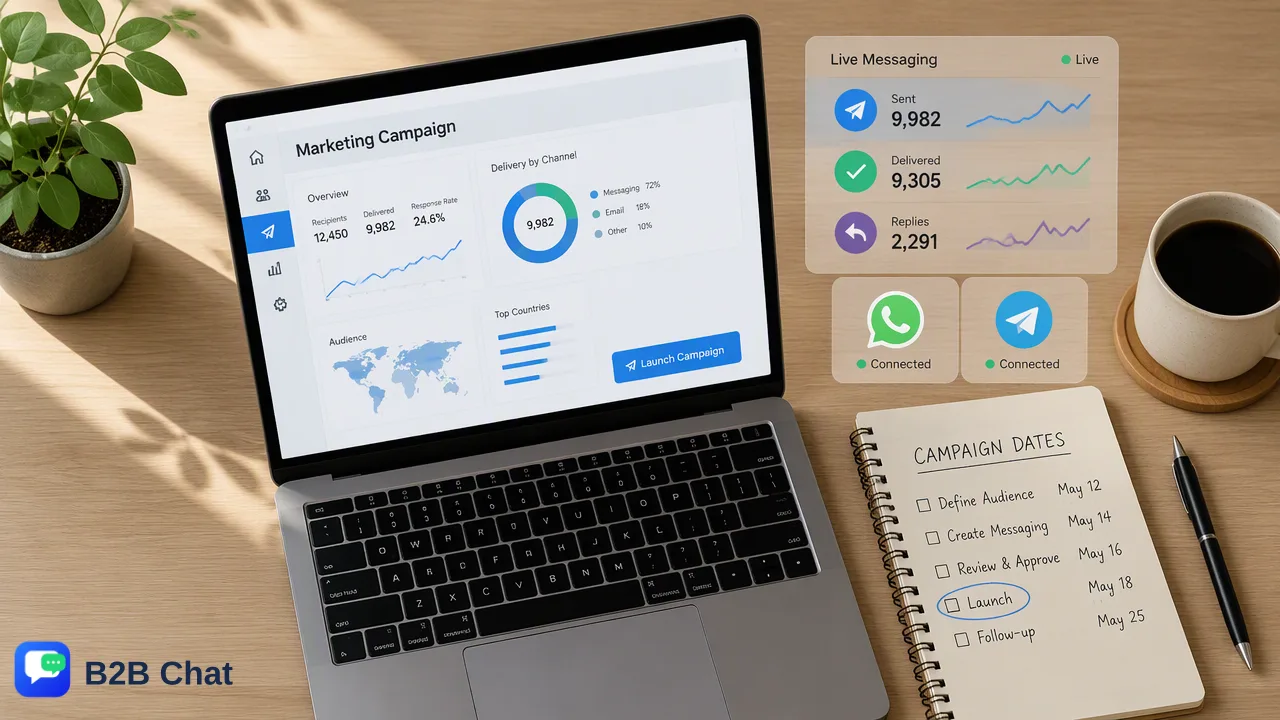
An operational guide exploring how the WhatsApp Marketing Messages Lite API simplifies promotional campaigns by reducing infrastructure overhead, and how teams manage incoming audience conversations.
The WhatsApp Marketing Messages Lite API is a streamlined interface engineered specifically for sending promotional messages at scale without the technical complexity of full Cloud API deployments. By minimizing infrastructure overhead—such as managing dedicated application servers and maintaining complex webhook architectures—it allows businesses to initiate marketing campaigns rapidly. To support the resulting influx of customer inquiries, organizations pair simplified outbound messaging channels with centralized workspaces and context-aware AI customer service to review intent, assist first-line replies, and maintain coherent conversation management.
The Evolution of WhatsApp Marketing APIs
Organizations adopting WhatsApp for customer outreach historically relied on the standard WhatsApp Cloud API or on-premises Business API. While powerful, enterprise Cloud API integrations require significant technical resources. Engineering teams must provision scalable server environments, build custom webhooks to process bidirectional events, configure security tokens, and monitor pipeline latency. For teams focused primarily on outbound marketing, this technical overhead often delays campaign execution. The WhatsApp Marketing Messages Lite API represents an architectural shift toward specialized messaging pipelines. Instead of requiring full bidirectional session infrastructure for basic broadcast needs, a Lite API framework isolates promotional delivery. This purpose-built approach decouples high-volume outbound campaigns from heavy backend maintenance, lowering engineering barriers for growth and marketing teams. | Dimension | Standard Cloud API | Marketing Messages Lite API | | :--- | :--- | :--- | | Primary Focus | Full-lifecycle bidirectional communication | High-volume promotional messaging | | Infrastructure Requirements | Dedicated servers, webhook handlers, session stores | Streamlined connection, minimal local hosting | | Integration Complexity | High engineering commitment | Rapid deployment and configuration | | Event Handling | Real-time bidirectional event management | Simplified outbound dispatch | By clarifying this functional boundary, organizations can evaluate their messaging goals accurately. When promotional reach is the primary objective, deploying a lighter integration model prevents technical bloat while preserving message dispatch capability.
Operational Benefits of Reduced Infrastructure Overhead
Transitioning from enterprise-grade infrastructure to lightweight messaging workflows yields substantial operational efficiencies for marketing and operations departments. ### Eliminating Webhook and Server Maintenance Full-stack messaging integrations mandate continuous monitoring of webhook listeners. If an internal server experiences downtime or fails to acknowledge callbacks within platform-specified timeouts, message pipelines can back up or drop events. The WhatsApp Marketing Messages Lite API mitigates these concerns by simplifying the dispatch contract. Teams no longer need to architect redundant webhook clusters solely to broadcast promotional announcements or campaign notifications. ### Accelerating Time-to-Market Because technical dependencies are trimmed, marketing teams do not require dedicated engineering sprints to launch promotional initiatives. Marketing operations can configure campaigns faster, iterate on messaging variations, and coordinate delivery around seasonal sales or regional events without extensive architectural reviews. ### Strategic Focus on Campaign Quality When technical friction is removed, teams can redirect operational focus toward message relevance, audience segmentation, and content strategy. A streamlined delivery mechanism allows campaign managers to prioritize message clarity and opt-in alignment rather than debugging infrastructure connectivity.
Managing Post-Campaign Inbound Inquiries with AI Assistance
While outbound delivery tools handle message distribution, successful promotional campaigns invariably trigger incoming customer replies. Customers respond to promotional messages with questions about product availability, order status, warranty terms, or regional shipping policies. Managing this inbound volume requires robust customer service workflows. High outbound volume without structured response handling risks leaving inquiries unattended, which diminishes campaign effectiveness. Incorporating AI-driven assistance into the support workflow helps teams triage and address incoming messages systematically. ### Context-Aware Intent Interpretation Modern AI customer service tools interpret user intent directly from incoming messages and the surrounding conversation context. Rather than relying on rigid keyword trees that misinterpret customer nuances, context-aware engines evaluate the customer's question within the conversation history. This context helps generate relevant first-line draft responses or automated answers for routine inquiries. ### Decision-Support and Human-in-the-Loop Workflows AI automation functions most reliably as an operational assistant rather than an unmonitored human replacement. By fielding repetitive introductory questions and drafting answers based on interaction context, AI support tools alleviate manual workload for human agents. Support teams retain oversight, allowing operators to step in for complex negotiations, sensitive escalations, or account-specific troubleshooting.
Best Practices for Coordinated WhatsApp Campaign Operations
Executing promotional campaigns effectively requires operational coordination beyond simple message dispatch. Teams managing global or multi-brand outreach should adopt structured communication practices to preserve message quality and operational clarity. ### Centralizing Multi-Account Management Large marketing initiatives often utilize multiple business numbers or regional accounts across territories. Managing these lines through fragmented physical devices or disparate browser windows introduces operational bottlenecks and message oversights. Utilizing a centralized workspace—such as B2B Chat's downloadable client for Windows and macOS—allows teams to aggregate multiple WhatsApp, Telegram, and LINE accounts into a single interface. Multi-account login streamlines agent access, reduces tool switching, and ensures incoming leads are routed efficiently. ### Preserving Context Across Touchpoints When promotional recipients reply, maintaining a continuous conversation log ensures that support personnel understand which promotion prompted the inquiry. Documenting campaign tags and conversation history within the unified console prevents repetitive questioning and improves customer experience. ### Monitoring Engagement Signals Responsibly Outbound campaigns should be evaluated by monitoring conversation continuation and opt-out requests. If recipient engagement drops or inquiries indicate confusion, teams should adjust promotional cadence, clarify copy, and verify that messaging aligns with customer expectations.
FAQ
How does a Lite API differ from a full Cloud API?
A full Cloud API is designed for complete, bidirectional customer communication requiring dedicated servers, session management, and complex webhook configurations. In contrast, the WhatsApp Marketing Messages Lite API focuses specifically on promotional message delivery, significantly reducing technical overhead and server maintenance requirements.
Can teams manage multiple WhatsApp accounts for marketing in one place?
Yes. Organizations can utilize centralized messaging workspaces like B2B Chat on Windows or macOS to aggregate multiple WhatsApp, Telegram, and LINE accounts. This unified environment simplifies multi-login management and helps teams coordinate conversations across separate lines without juggling multiple devices.
How does AI assist with customer responses during promotional campaigns?
AI customer service tools interpret customer intent from incoming messages and surrounding conversation context. This supports automated first-line responses to routine queries while allowing human operators to review and handle complex interactions, maintaining message quality during high-volume campaign surges.
Learn More
Choose the product information that fits the next step in your workflow.