Scaling WhatsApp Sales: Moving from Manual Inbox Management to Structured CRM Workflows
Transition from manual WhatsApp inboxes to a structured CRM sales workflow. Learn how centralized messaging and AI triage help teams manage growing lead volume.
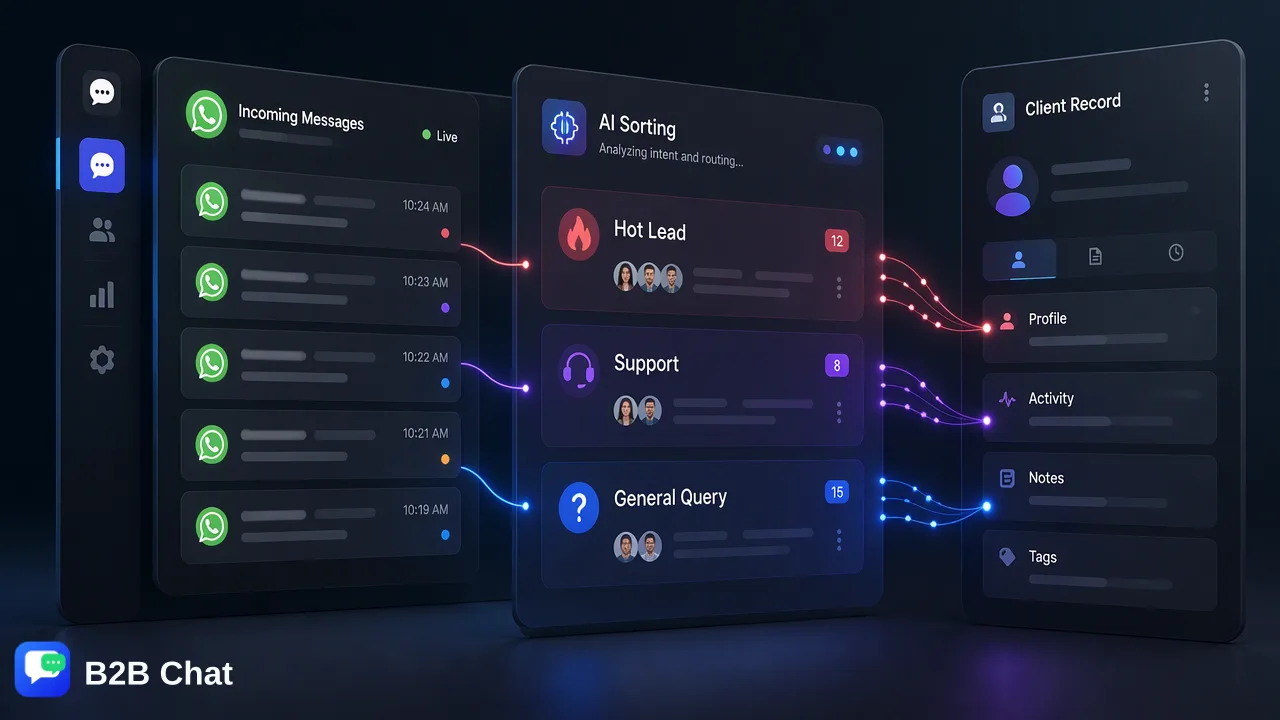
Discover how transitioning from manual, device-based WhatsApp messaging to a structured CRM workflow and centralized workspace helps growing teams eliminate visibility gaps, speed up triage, and maintain lead history.
As sales inquiry volume expands, managing WhatsApp conversations through personal devices or isolated web instances creates operational bottlenecks, including unrecorded customer histories and delayed follow-ups. Transitioning to a structured WhatsApp sales workflow backed by a centralized workspace and CRM-aligned record keeping helps sales teams maintain communication visibility, coordinate agent handoffs, and use AI-assisted triage to interpret customer intent without losing critical context.
The Hidden Costs of Manual WhatsApp Sales Management
Many growing businesses launch sales initiatives on WhatsApp using standard mobile devices or individual browser tabs. While accessible initially, manual inbox management quickly introduces operational friction as inbound conversation volumes expand. When individual sales reps manage prospects from standalone devices, sales leadership loses visibility into pipeline activity. Conversation histories remain trapped on personal hardware, making it difficult to audit message quality, identify deal drop-off points, or reassign leads when an agent is out of office. Furthermore, if a team member departs, the accumulated relationship history and contact records often leave with them, creating severe data silos and compliance vulnerabilities. | Operational Dimension | Manual Inbox Management | Structured CRM Workflow | | :--- | :--- | :--- | | Account Access | Fragmented across individual devices | Centralized multi-account desktop client | | Conversation History | Localized to individual handsets | Aggregated across team workspaces | | Handoff Coordination | Manual forwarding and phone passing | Centralized oversight and structured routing | | Response Mechanism | Dependent entirely on individual rep availability | AI-assisted triage supporting human agents |
Why High-Intent Leads Require Structured Follow-Up
Inbound prospects arriving via paid digital campaigns, social channels, or direct website links carry strong immediate buying intent. These buyers expect direct, immediate engagement similar to standard personal messaging. When an organization relies on manual inboxes, incoming chats easily become buried under secondary notifications, resulting in response lags. When a delay occurs, prospective buyers frequently turn to alternate competitors. A structured sales workflow establishes predetermined inquiry handling protocols, ensuring inbound interest receives immediate acknowledgment, accurate categorization, and timely human follow-up.
Centralizing Conversations for Team Collaboration
Overcoming the bottlenecks of device-bound messaging requires centralizing chat channels into a coordinated workspace. Using dedicated desktop clients for Windows and macOS allows organizations to consolidate multiple operational numbers and cross-platform channels—including WhatsApp, Telegram, and LINE—into one interface. Aggregating messaging accounts into a shared operational hub eliminates the need for sales reps to juggle physical handsets or alternate browser windows. It enables supervisors to monitor active dialogue, balance rep workloads, and maintain continuous team oversight across global sales campaigns. Centralized access also ensures that if an agent is reassigned, incoming prospects experience seamless continuity rather than dropped conversations.
Scaling Operations Through AI-Assisted Triage
As incoming chat volumes climb, human agents often spend excessive hours answering repetitive preliminary questions, qualifying basic requirements, or sorting leads. Incorporating AI customer service tools into the messaging environment provides intelligent first-line operational support. Rather than relying on brittle, keyword-only auto-responders, AI customer service systems evaluate conversation context to interpret the prospect's intent. The system can immediately provide context-appropriate initial information, identify the buyer's product interest, and prepare draft answers for sales agents. This first-line triage assists human reps by filtering routine inquiries, allowing them to focus specialized attention on high-value sales negotiations and relationship building.
Integrating Messaging with CRM Infrastructure
A mature social sales workflow connects customer messaging directly with enterprise CRM infrastructure. While social messaging provides an immediate, conversational environment, the CRM remains the single source of truth for deal tracking, customer identity, and revenue forecasting. Establishing clear operational bridges between messaging tools and CRM platforms ensures that customer contact identifiers, engagement notes, and conversion milestones are methodically recorded. This visibility prevents conversational data from being siloed, informs future sales follow-ups, and equips leadership with the operational metrics necessary to measure marketing return on investment and refine sales operations over time.
FAQ
What operational risks arise when teams manage sales on personal WhatsApp accounts?
Relying on personal mobile devices decentralizes customer data, leaving sales leadership with zero visibility into conversation progress, deal stages, or agent responsiveness. When an employee leaves the company or changes hardware, unrecorded conversation histories and high-intent contact details are often permanently lost.
How does a centralized messaging workspace support team efficiency?
A centralized downloadable workspace brings multi-account messaging across WhatsApp, Telegram, and LINE into a shared desktop environment. This eliminates the need for physical device swapping, allows team-wide conversation oversight, and provides a unified interface for managing customer inquiries.
Can AI customer service automation replace human sales representatives?
AI customer service tools are designed to assist human agents rather than replace them entirely. By evaluating conversation context and incoming customer intent, AI helps handle routine first-line triage, preparing draft replies and routing complex inquiries to experienced sales reps for high-touch closing.
How can organizations connect chat interactions to CRM records?
Organizations can bridge chat interactions with CRM systems by establishing standardized operating procedures for logging lead contact details, chat summaries, and pipeline stages. This integration ensures that conversational data enriches broader customer intelligence and supports cross-functional visibility.
Learn More
Choose the product information that fits the next step in your workflow.