Best Practices for WhatsApp and Telegram Team Operations
Discover key WhatsApp Telegram team management best practices to centralize messaging accounts, maintain conversation context, and scale global support.
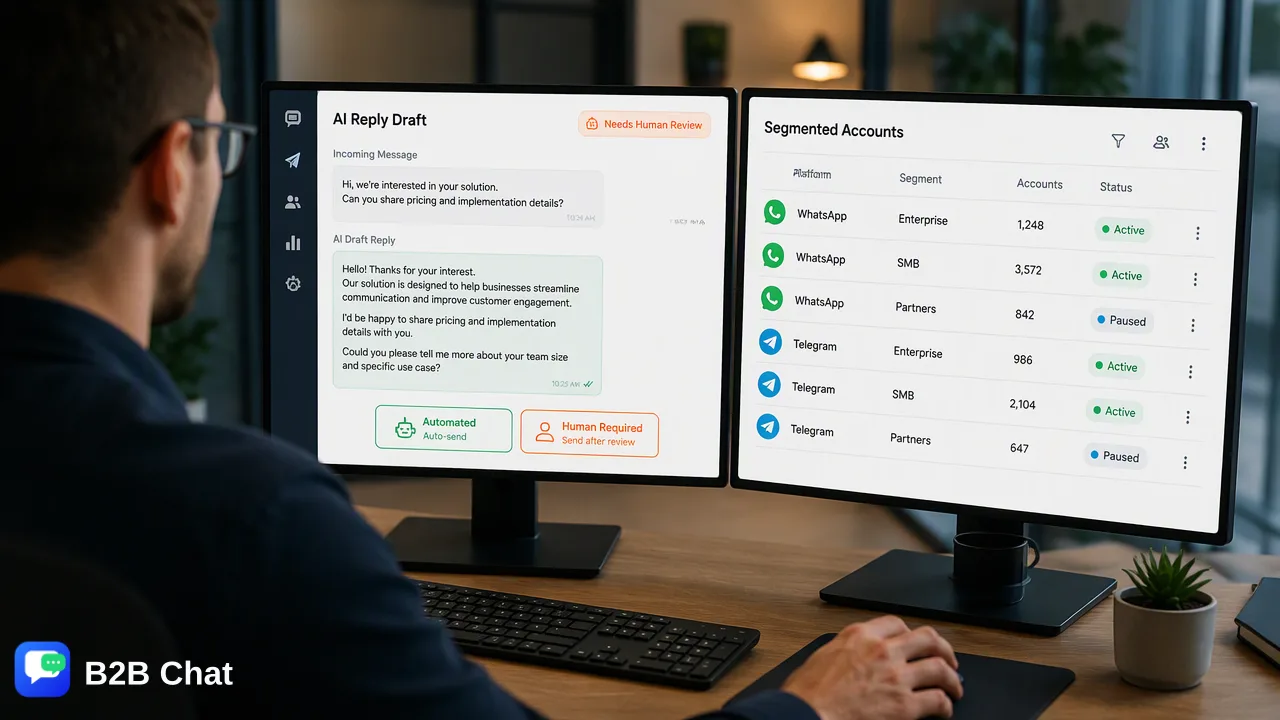
A practical operational guide outlining strategies for managing team workflows across WhatsApp and Telegram, focusing on account aggregation, context retention during handoffs, and assistive AI tools.
Implementing robust WhatsApp Telegram team management best practices centers on consolidating multiple messaging channels into a unified workspace, preserving full conversation context during team handoffs, and applying assistive AI tools to bridge language barriers. Operating customer communications across WhatsApp and Telegram often introduces operational friction when staff members juggle disparate mobile devices or isolated desktop logins. Unifying these touchpoints within a single desktop workspace helps organizations maintain transparent account ownership, structure orderly shift handoffs, and support international inquiries while keeping human oversight over sensitive customer interactions.
Centralizing Multi-Account Access in a Unified Workspace
Managing enterprise customer operations across WhatsApp and Telegram frequently leads to account fragmentation when operators rely on individual mobile phones or disconnected browser tabs. This decentralized setup makes supervisor oversight challenging, increases response delays, and exposes organizations to operational blind spots. A foundational best practice is deploying a single workspace client that supports multi-account login across your messaging portfolio. B2B Chat provides a downloadable desktop application for Windows and macOS that connects multiple WhatsApp, Telegram, and LINE accounts simultaneously. Operating through a unified client lets teams monitor inbound queues from different phone numbers in real time, streamlining outbound outreach and inbound support without requiring constant device switching.
Standardizing Internal Handoffs and Context Retention
Customer satisfaction on conversational channels depends heavily on continuity. When an inquiry moves from an initial triage agent to a specialized representative, or transitions across time-zone shifts, losing dialogue history forces the customer to repeat details and creates unnecessary friction. To establish seamless handoffs, organizations should anchor operational handoffs to full conversation histories within their messaging software. Maintaining unbroken message records gives incoming agents immediate visibility into earlier customer statements, shared requirements, and technical details. Documenting standardized tags or status indicators inside the shared workflow ensures that team members know precisely whether a conversation is open, pending customer response, or ready for escalation.
Scaling Global Communication with Context-Aware Translation
Cross-border growth and private-domain operations require teams to communicate with buyers in their preferred regional languages. Traditional literal translation engines frequently misinterpret conversational idioms, resulting in awkward phrasing or misaligned customer expectations. Teams should implement assistive translation systems capable of automatic language detection and contextual nuance adjustment. B2B Chat incorporates AI translation supporting more than 200 languages, adapting translation phrasing based on surrounding conversational context. This capability helps support representatives comprehend incoming customer intent accurately and craft natural, professional responses in the customer's native language, even when operating in unfamiliar regional markets.
Deploying First-Line AI Assistance with Human Oversight
High-volume conversational channels receive a significant volume of routine questions regarding basic product availability, order status, and business hours. Addressing every query manually can overwhelm human operators, while rigid, rule-based auto-replies often frustrate customers by misunderstanding complex requests. A balanced operational model combines automated first-line triage with active human review. B2B Chat features AI customer service tools designed to interpret customer intent from message context and draft automated first-line replies. Rather than replacing human agents, this first-line automation assists teams by handling repetitive inquiries immediately, while routing nuanced or sensitive conversations directly to qualified specialists for human evaluation.
Structuring Functional Workflows Across Channels and Roles
To maintain order across expanding teams, organizations should segment messaging accounts according to clear departmental roles or geographical jurisdictions rather than commingling all traffic into generic inboxes. | Operational Function | Platform Focus | Workflow Objective | | :--- | :--- | :--- | | Inbound Customer Support | WhatsApp & LINE | Resolve post-sale inquiries, address service issues, and maintain dialogue history. | | Community & Marketing Updates | Telegram Channels & Groups | Coordinate public broadcasts, share campaign announcements, and nurture user communities. | | Cross-Border Sales Outreach | WhatsApp & Telegram | Engage regional prospects using context-aware translation to conduct localized discovery. | Assigning designated team members to specific functional queues ensures accountability, simplifies workload distribution, and helps management assess operational capacity across distinct regions.
FAQ
How can teams manage multiple WhatsApp and Telegram accounts effectively?
Teams can operate multiple WhatsApp and Telegram accounts effectively by utilizing a centralized workspace client rather than maintaining physical devices for each individual profile. B2B Chat provides a downloadable client across Windows and macOS that aggregates multiple accounts into a unified interface, helping teams conduct support and outbound messaging from one operational hub.
What role does AI play in maintaining conversation context during handoffs?
Assistive AI tools examine incoming customer text alongside prior conversation history to interpret customer intent and generate context-appropriate translations across more than 200 languages. This contextual comprehension helps subsequent agents review past dialogue quickly and understand customer intent without requiring the customer to repeat information.
How does centralized account management support team response workflows?
Centralized account aggregation consolidates inbound notifications across different platforms and accounts into one desktop environment. This visibility helps team leads route open inquiries promptly, assign conversations to designated operators, and monitor overall queue volume across diverse regional markets.
Learn More
Choose the product information that fits the next step in your workflow.