Indonesian Customer Service Phrases for Teams Selling to Indonesia
Polite Bahasa Indonesia phrases for greetings, price, shipping, payment and after-sales, with notes on Bapak, Ibu and Kak and when to review translations.
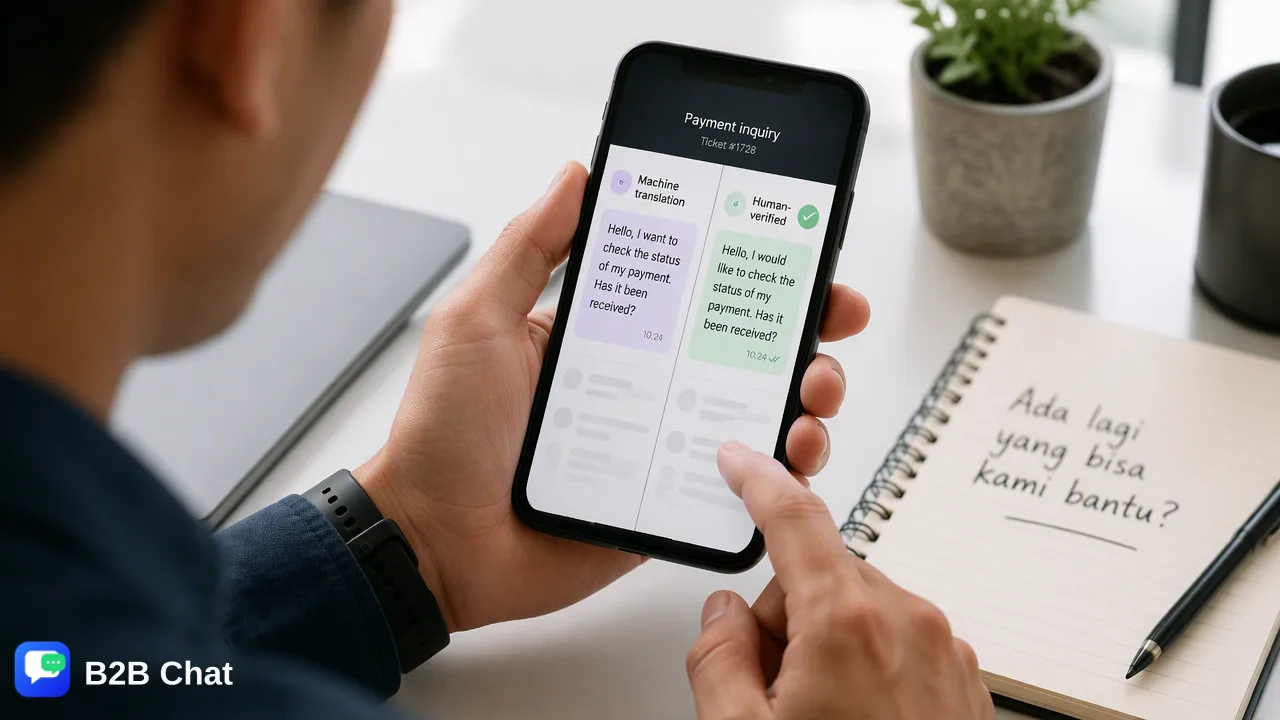
Categorized Bahasa Indonesia phrases for customer chats, with guidance on formality and when to review automatic translation.
The most useful Indonesian customer service phrases are short, polite and built around the buyer's form of address: Kak for a casual buyer, Bapak or Ibu when you are unsure or the buyer is senior. Start with a time-appropriate greeting, answer the question in one or two sentences, and close with "Ada lagi yang bisa kami bantu?" The lists below cover the five moments that fill most chats: greeting, price, shipping, payment and after-sales.
Choosing between Kak, Bapak and Ibu
Form of address sets the tone of the whole chat. Language guides describe Pak and Bu (Bapak and Ibu) as the respectful choice for people clearly older or senior, while Kak, Mas and Mbak suit people around your own age or slightly older. Chat with online shoppers is often informal, so a warm tone with Kak is common, but a wrong guess toward too casual reads worse than one toward too formal.
A simple rule for a team:
- Use Kak when the buyer writes it themselves, or writes casually with emoji and short words.
- Use Bapak or Ibu with a new buyer whose age is unclear, with business buyers, and with anyone who writes formally.
- Mirror the buyer after the first few messages, and keep the same form for the rest of the conversation.
- Use the name when you have it: Kak Rina, Bapak Budi.
Avoid Anda as the default in chat. It is correct but can sound distant.
Greetings and openers
Indonesian greetings change with the time of day, which is worth matching to the buyer's local time rather than the team's.
| Moment | Phrase | Meaning |
|---|---|---|
| Morning | Selamat pagi, Kak. Ada yang bisa kami bantu? | Good morning. How can we help? |
| Midday | Selamat siang, Bapak/Ibu. Terima kasih sudah menghubungi kami. | Good afternoon. Thank you for contacting us. |
| Afternoon | Selamat sore, Kak. Silakan, mau tanya apa? | Good afternoon. What would you like to ask? |
| Evening | Selamat malam, Kak. Mohon maaf baru membalas. | Good evening. Sorry for the late reply. |
Indonesia spans three time zones, so check where the buyer is before choosing between pagi, siang, sore and malam.
Price, shipping and payment questions
These phrases cover the questions that appear most often in sales chats.
Price and availability
- Untuk produk ini, stoknya tersedia, Kak. (This product is in stock.)
- Harga per unit sesuai jumlah pesanan. Boleh tahu jumlahnya? (The unit price depends on the order quantity. May I ask how many you need?)
- Mohon ditunggu sebentar ya, kami cek dulu. (Please wait a moment while we check.)
Shipping
- Pesanan akan kami kirim ke alamat Kakak. Mohon konfirmasi alamat lengkapnya. (We will ship to your address. Please confirm the full address.)
- Nomor resi akan kami kirim setelah paket diserahkan ke kurir. (We will send the tracking number once the courier has the parcel.)
- Estimasi pengiriman dapat berbeda tergantung kurir dan lokasi. (Delivery estimates vary by courier and location.)
Payment
- Mohon lakukan pembayaran sesuai tagihan yang kami kirim, lalu kirim bukti transfer. (Please pay the invoice we sent and send the transfer proof.)
- Pembayaran sudah kami terima. Terima kasih, Kak. (We have received your payment. Thank you.)
Only state a delivery time or payment method you have confirmed. A translated estimate that the team cannot meet creates more work than a slower, accurate answer.
After-sales and closing
After-sales messages are where tone matters most.
- Mohon maaf atas ketidaknyamanannya. (We apologize for the inconvenience.)
- Boleh kirim foto produk atau bukti pesanannya, Kak? (Could you send a photo of the product or proof of your order?)
- Kami akan menindaklanjuti dan mengabari Kakak secepatnya. (We will follow up and update you soon.)
- Ada lagi yang bisa kami bantu? (Is there anything else we can help with?)
- Terima kasih sudah berbelanja di toko kami. (Thank you for shopping with us.)
The phrase Ada lagi yang bisa saya bantu? is a standard closing in Indonesian phone and service language, as in this phone phrase guide. Chat teams usually switch saya to kami to speak for the company.
Using translation without losing the polite tone
Few teams selling to Indonesia have staff who write fluent Bahasa Indonesia for every reply, so automatic translation does much of the work. B2B Chat's Smart Translation detects the buyer's language and translates in both directions, with context-aware wording across 200+ languages. The WhatsApp chat translator page describes the workflow, and the Indonesia customer service page covers the market.
A good division of labor:
- Save the approved phrases above in the reply library so agents send consistent wording.
- Let translation handle free-form questions and answers.
- Have a Bahasa-speaking reviewer check new templates, complaint replies and anything involving money, then add the approved result to the library.
Translation can miss register: a sentence that is correct may still sound too formal or too casual. Reviewing templates once is cheaper than correcting tone on every chat, and it does not require promising perfect machine output.
FAQ
Should teams use Kak or Bapak/Ibu with Indonesian buyers?
Use Bapak or Ibu when age or seniority is unclear, and Kak when the buyer writes casually or uses Kak themselves. Then mirror the buyer's style consistently.
How can teams keep Indonesian replies consistent across agents?
Store reviewed phrases in a shared reply library so every agent starts from the same wording and only adjusts names and details.
When should automatic translation be reviewed before sending in Bahasa Indonesia?
Review new templates, complaints, apologies and anything with prices, dates or payment details. Routine questions are usually fine with translation alone.
Is formal Indonesian always better for customer service?
Not always. Marketplace chat is often informal, so a polite but warm tone with Kak is common. Formality should follow the buyer's own register.
Learn More
Choose the product information that fits the next step in your workflow.