How to Use Interactive Messaging Flows to Capture Data Without Leaving the Chat
Learn how interactive messaging flows for business capture structured data in-chat, reducing friction and supporting global customer service workflows.
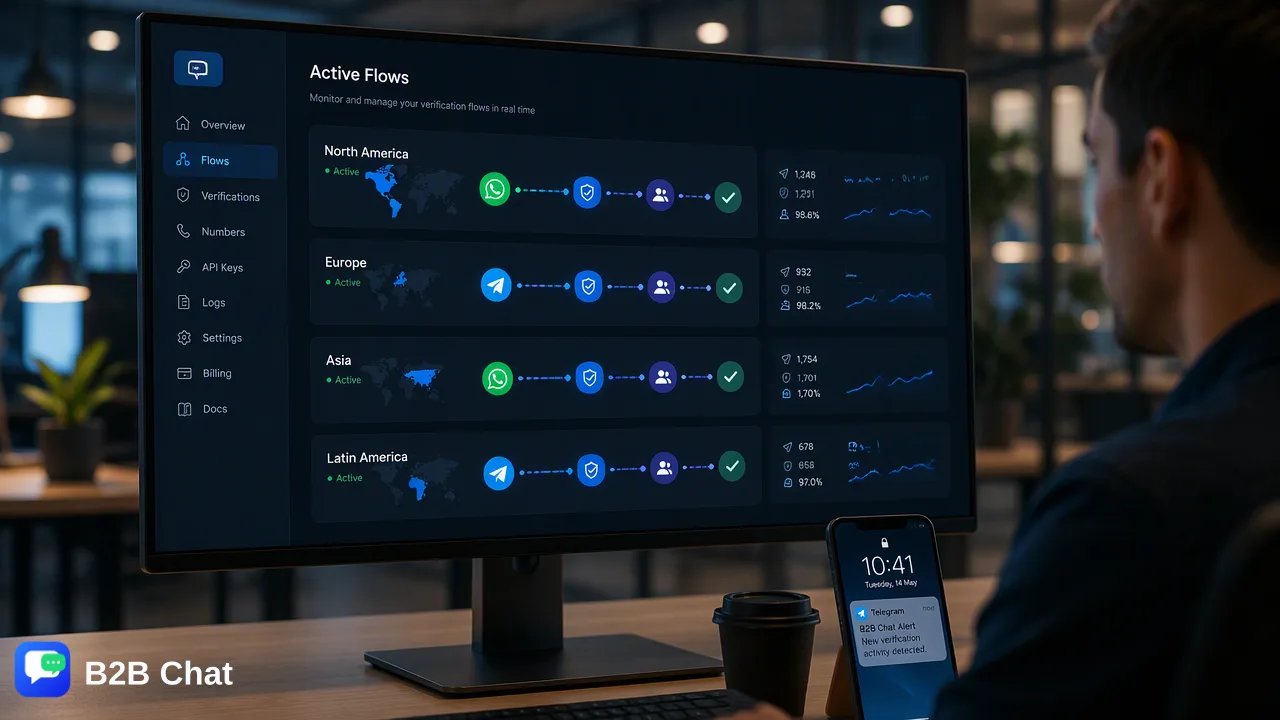
Learn how interactive messaging flows help organizations capture structured data directly within chat platforms, reducing friction and supporting global customer service workflows.
Interactive messaging flows for business allow organizations to capture structured data—such as lead information, appointment bookings, and customer feedback—directly within chat platforms like WhatsApp and Telegram. By eliminating the need for users to navigate to external landing pages, businesses reduce friction and minimize drop-off rates during the conversion process. These native, in-chat experiences collect cleaner, more actionable data that integrates seamlessly into existing CRM and support workflows. Instead of relying on unstructured text transcripts, teams can deploy automated sequences that guide users through specific tasks, supporting faster resolution and more efficient global operations.
The Friction of External Forms
Traditional data collection often relies on redirecting users from a messaging conversation to an external website or web form. This context switch introduces significant friction into the customer journey. When users are forced to leave their preferred chat application, wait for a browser to load, and navigate a separate interface, they frequently abandon the process. External forms create friction that causes users to drop off during the conversion process. In a customer service or sales context, every additional step reduces the likelihood of task completion. Users engaging on mobile devices are particularly sensitive to these interruptions. By requiring a transition from a chat interface to a web browser, organizations disrupt the natural flow of conversation, making it harder to capture essential information efficiently.
Benefits of In-Chat Data Collection
Moving data collection directly into the messaging environment offers distinct operational advantages. Interactive flows improve completion rates by keeping the user within the familiar messaging environment. Instead of asking open-ended questions that result in messy, unstructured replies, organizations can present guided inputs. Interactive flows allow for native data collection including text inputs, dropdowns, and date pickers. This structured approach significantly improves data quality. Structured data collected in-chat is easier to process and sync with CRM systems than unstructured transcripts. When a user selects a date from a native picker or chooses an option from a predefined dropdown, the resulting data is standardized. This standardization reduces the need for manual data entry and helps support teams route inquiries or update customer records with greater accuracy.
| Traditional Web Forms | Interactive Messaging Flows |
|---|---|
| Requires context switching to a browser | Keeps users within the chat interface |
| Higher risk of drop-off during loading | Reduces friction by eliminating redirects |
| Often requires manual follow-up | Captures standardized, structured data |
| Disconnected from the chat history | Maintains conversation context |
High-Value Use Cases for Interactive Flows
Organizations can deploy interactive messaging flows across various stages of the customer lifecycle to streamline operations. High-value use cases include event registration, lead qualification, appointment booking, and customer feedback.
- Lead Qualification: Instead of routing all inquiries to a human agent immediately, businesses can use an interactive flow to ask qualifying questions. Dropdowns can capture company size, industry, or specific product interest, helping teams prioritize high-value prospects.
- Appointment Booking: Date and time pickers embedded in the chat allow users to schedule consultations or service visits without navigating a separate booking portal.
- Event Registration: Organizations hosting webinars or physical events can collect attendee details, dietary preferences, and session choices directly through messaging channels.
- Customer Feedback: Post-interaction surveys delivered as in-chat flows yield higher participation than email-based surveys, as they capture the user's sentiment while the experience is still fresh.
Implementing Flows with AI-Assisted Support
Deploying interactive messaging flows at scale requires robust infrastructure to manage conversations and interpret user inputs. B2B Chat supports WhatsApp and Telegram account aggregation, allowing teams to manage these flows from a single workspace. Through a downloadable client available for Windows and macOS, organizations can centralize their outbound marketing and support operations. To maximize the efficiency of these flows, AI customer service assists in interpreting customer intent from incoming messages to guide users through automated flows. By understanding the conversation context, the system can trigger the appropriate interactive sequence—such as presenting a booking flow when a user asks about availability. This assists automated first-line responses, ensuring users receive immediate, relevant options before human review is necessary. Furthermore, global operations require these flows to be accessible across different regions. AI translation ensures that interactive flows remain accessible to global audiences across 200+ languages. The system automatically detects the user's language and translates messages, with the translation expression adjusted based on conversation context. This capability allows cross-border ecommerce and support teams to deploy standardized data collection flows worldwide without maintaining separate localized versions for every market.
FAQ
Why are interactive flows more effective than traditional web forms?
Interactive flows improve completion rates by keeping the user within the familiar messaging environment. External forms create friction that causes users to drop off during the conversion process, whereas in-chat flows allow for native data collection including text inputs, dropdowns, and date pickers without requiring a browser redirect.
Can interactive flows be used for multilingual customer support?
Yes, when integrated with translation tools. For example, B2B Chat provides AI translation that automatically detects and translates customer messages across 200+ languages. This ensures that interactive flows remain accessible to global audiences, with translation expressions adjusted based on conversation context.
How does AI help in managing these messaging flows?
AI customer service assists in interpreting customer intent from incoming messages to guide users through automated flows. By analyzing the conversation context, AI can assist automated first-line responses, triggering the correct interactive flow—such as a booking or feedback sequence—before routing complex issues to human agents.
What types of data can be collected through in-chat flows?
Organizations can collect highly structured information. High-value use cases include event registration, lead qualification, appointment booking, and customer feedback. Because the data is gathered via native inputs like dropdowns and date pickers, the structured data collected in-chat is easier to process and sync with CRM systems than unstructured transcripts.