Portuguese Customer Service Phrases for Brazilian Buyers on WhatsApp
Brazilian Portuguese phrases for WhatsApp sales and support, grouped by greeting, quotes, Pix payment, delivery and returns, with notes on tone.
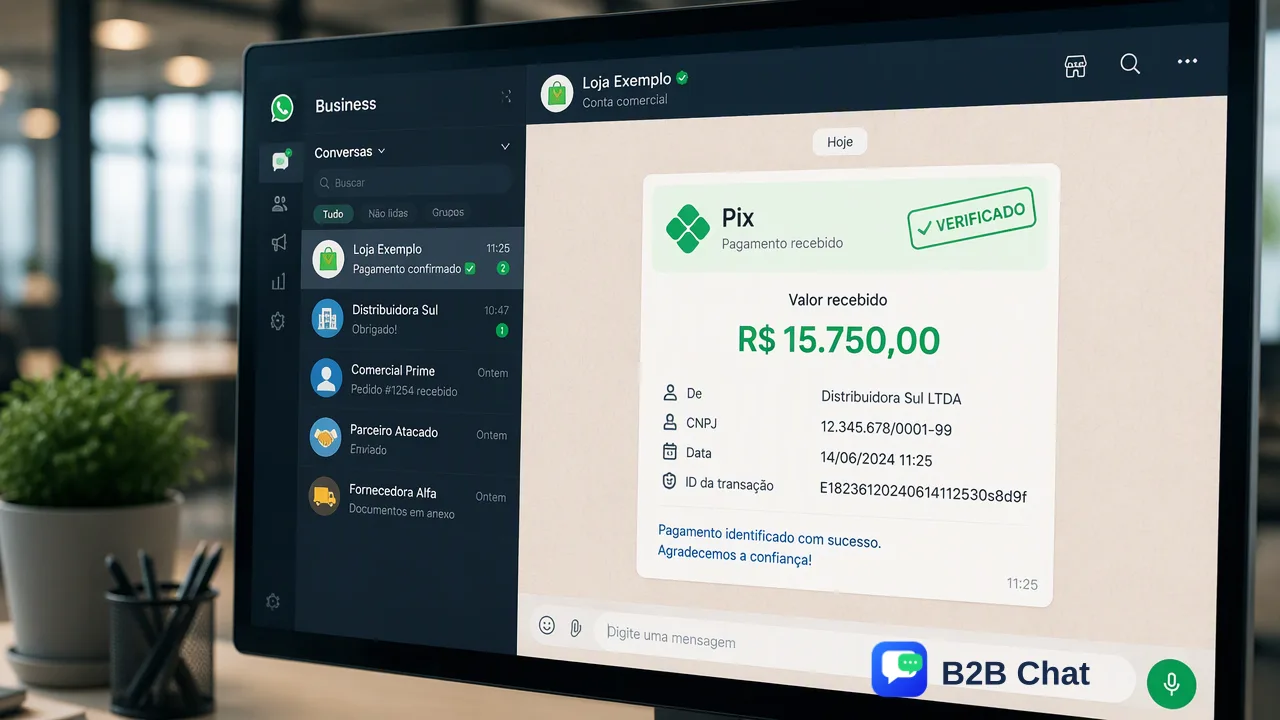
A categorized list of Brazilian Portuguese customer service phrases for WhatsApp, with tone notes and guidance on when a translated reply needs a native check.
The most useful Portuguese customer service phrases for Brazilian buyers are short, warm and written in Brazilian rather than European Portuguese: open with "Olá, tudo bem?", address the customer as "você", and confirm next steps clearly. Group your phrases by the moments that repeat every day (greeting, quote, payment, delivery and after-sales) so every agent sends the same wording. Automatic translation handles routine back-and-forth well, while messages about money, deadlines and returns deserve a quick native-speaker check before they go out.
Brazilian versus European Portuguese: what changes in a sales chat
Most phrase lists online mix the two variants. Brazilian buyers notice, and European forms can read as stiff or foreign. The differences that matter most in a WhatsApp conversation:
| Situation | Brazilian Portuguese | European Portuguese |
|---|---|---|
| Addressing the customer | você (neutral, polite) | o senhor / a senhora, or tu among friends |
| "I am checking" | Estou verificando | Estou a verificar |
| Mobile phone | celular | telemóvel |
| Bus / delivery van context | ônibus, entregador | autocarro, estafeta |
| Typical chat greeting | Oi / Olá, tudo bem? | Olá, bom dia |
The gerund ("estou enviando", "estamos separando seu pedido") is the clearest marker. If a translated reply uses "estou a enviar", it was produced in the European variant and should be adjusted. Formal "o senhor / a senhora" is still used in Brazil for older customers or complaints, but "você" is the safe default in sales chats.
Portuguese customer service phrases by conversation stage
Greeting and first response
- Olá, tudo bem? Obrigado pelo contato! - Hello, how are you? Thanks for reaching out.
- Bom dia / Boa tarde / Boa noite! - Good morning / afternoon / evening (use the customer's local time, not yours).
- Como posso ajudar? - Offers help and invites the customer to explain the request.
- Só um momento, por favor, vou verificar. - One moment, please, I'll check.
Product questions and quotes
- Esse modelo está disponível em estoque. - This model is in stock.
- Vou te enviar o orçamento em seguida. - I'll send you the quote right away.
- O valor inclui frete? / O frete é calculado pelo CEP. - Does the price include shipping? / Shipping is calculated by postal code (CEP).
- Qual quantidade você precisa? - What quantity do you need?
Payment
- Aceitamos Pix, boleto e cartão. - We accept Pix, boleto and card (list only methods you actually accept).
- Assim que o pagamento for confirmado, te aviso. - I'll let you know as soon as payment is confirmed.
- Pode me enviar o comprovante, por favor? - Could you send the receipt, please?
Pix is the instant payment system created and run by the Banco Central do Brasil, and Brazilian buyers often expect it as an option. Never let a translator alter a Pix key, amount or due date; paste those values yourself.
Delivery
- Seu pedido foi enviado. Segue o código de rastreio: - Your order has shipped. Here is the tracking code:
- O prazo de entrega é de X a Y dias úteis. - Delivery takes X to Y business days.
- Houve um atraso na transportadora, peço desculpas. - There was a carrier delay, I apologize.
Complaints and after-sales
- Sinto muito pelo transtorno. - I'm sorry for the inconvenience.
- Pode me mandar uma foto do produto? - Can you send a photo of the product?
- Vamos resolver isso para você. - We'll sort this out for you.
- Fico à disposição! - I remain available (a common, friendly sign-off).
For online purchases, Brazil's consumer code gives buyers a seven-day right of withdrawal from receipt, as the Ministry of Justice explains. Return phrases should reflect that rule rather than contradict it.
Tone rules that keep Portuguese replies sounding natural
Brazilian customers generally expect a friendly, personal tone even in business chats. A few habits help:
- Use the customer's first name once it is known, and keep "você" throughout instead of switching forms.
- Short warm closers such as "Abraço!" or "Qualquer dúvida, é só chamar" fit WhatsApp; long formal email sign-offs do not.
- Avoid all-caps and stacked exclamation marks in complaints; they read as shouting.
- Write numbers the Brazilian way: comma for decimals and period for thousands (R$ 1.250,90).
- Do not literally translate Chinese politeness formulas; "Desculpe incomodar" before every question sounds anxious rather than polite.
Where automatic translation helps and where a native check is worth it
When the team does not speak Portuguese, two-way translation covers the bulk of routine messages. In the B2B Chat desktop client, the WhatsApp chat translator detects the customer's language automatically and translates in both directions, using conversation context to choose wording. Agents read Portuguese messages in Chinese and reply in Chinese, and the reply goes out in Portuguese.
Use this split to decide what needs review:
| Message type | Translation alone | Native check first |
|---|---|---|
| Greetings, availability, simple product facts | Usually fine | Not needed |
| Quotes with prices, quantities, CEP shipping rules | Paste numbers yourself | Recommended |
| Payment instructions, Pix keys, boleto due dates | Paste values yourself | Recommended |
| Complaints, returns, warranty wording | Risky | Strongly recommended |
Save the reviewed versions in the reply library so they are written once and reused by every agent. Teams serving several markets can also see the broader Latin American customer service workflow.
Common mistakes with Portuguese customer service phrases
- Mixing variants in one chat, such as "você" with "estou a verificar".
- Sending greetings by your own clock; a "Bom dia" at 9 p.m. in São Paulo looks automated.
- Letting translation rewrite numbers such as prices, dates and tracking codes.
- Copying Spanish phrases meant for Mexico or Colombia; "Con gusto" is not Portuguese.
- Promising return terms that conflict with the seven-day withdrawal rule for online purchases.
FAQ
How can teams tell whether a Portuguese phrase is Brazilian or European?
Look at the verb form for ongoing actions. Brazilian Portuguese uses the gerund ("estou verificando"), while European Portuguese uses "a" plus the infinitive ("estou a verificar"). Vocabulary such as "celular" versus "telemóvel" is another quick signal.
Should agents use "você" or "o senhor" with Brazilian buyers?
"Você" is the normal polite form for sales chats. "O senhor" or "a senhora" can be used for older customers or a tense complaint, but agents should pick one form and keep it for the whole conversation.
How can teams keep Portuguese replies consistent across several agents?
Write reviewed versions of the most common replies once, store them in a shared reply library, and let agents reuse them. Translation then handles the variable parts of each conversation.
Which Portuguese messages should be checked by a native speaker?
Messages that carry money, deadlines or obligations: quotes, payment instructions, delivery commitments, return and warranty terms. A small wording error in those messages costs more than in a greeting.
Learn More
Choose the product information that fits the next step in your workflow.