Translating WhatsApp Chats with Brazilian Buyers: English to Portuguese Without Losing Context
How to translate WhatsApp messages from English to Portuguese with Brazilian buyers: reading, replying, regional wording and pre-send checks.
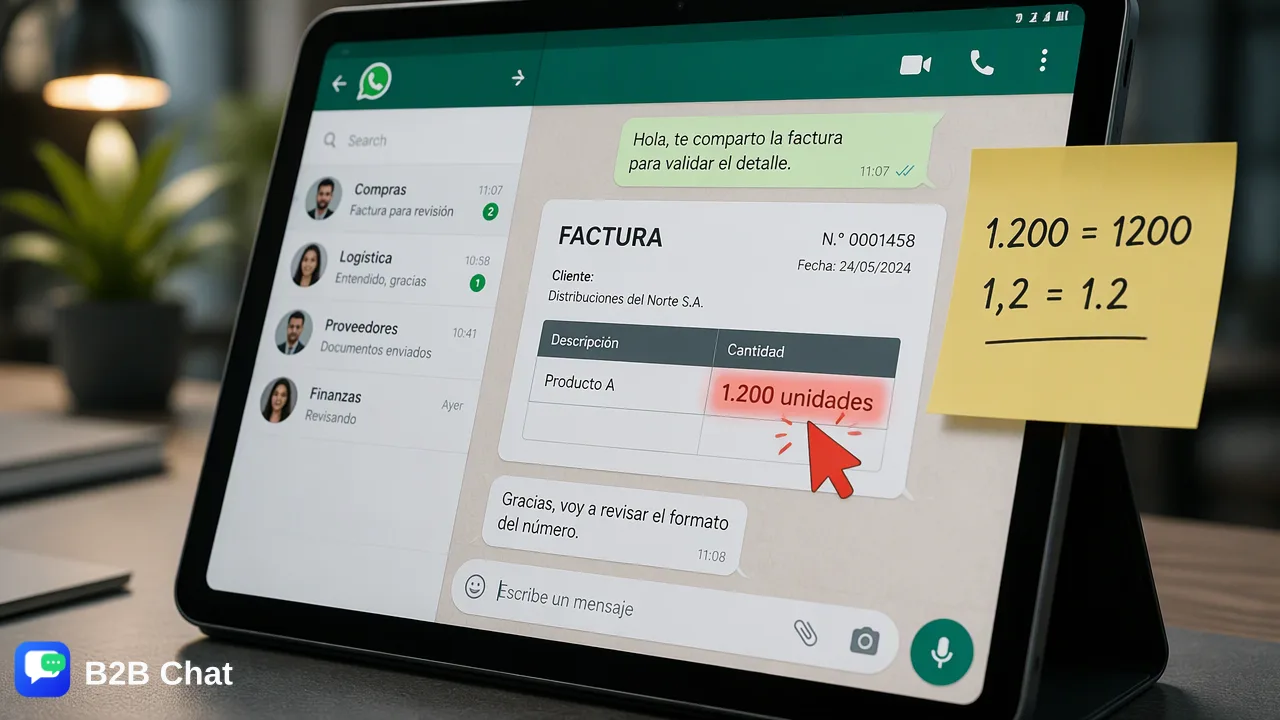
A practical guide to translating WhatsApp conversations between English and Brazilian Portuguese while keeping prices, sizes and delivery terms accurate.
To translate WhatsApp messages from English to Portuguese for Brazilian buyers, use a client that detects the language automatically, translates incoming messages and translates your replies, then review anything with prices, sizes or delivery terms before sending. Write short, literal English sentences, use Brazilian rather than European Portuguese wording, and treat translation as an assistant that a person still checks. This keeps conversations fast without turning a mistranslated number into a dispute.
Read first: let the client detect the language
Brazilian buyers often write in short bursts, mix in abbreviations and voice-note transcripts, and rarely mention the language they are using. Asking staff to guess and pick a source language for every message slows the team down and invites mistakes. In B2B Chat, Smart Translation detects the language automatically and translates incoming messages into the language your team works in, so a message such as a price question reads naturally in the conversation window.
WhatsApp itself has a built-in option for reading messages. Per WhatsApp's announcement, you long-press a message, tap Translate and pick languages, and the translation runs on the device. That is useful for an occasional message on a phone. A team answering many Brazilian buyers across several numbers needs something that applies to every conversation in one window and also translates the reply, which the built-in feature does not do for outgoing text.
A simple reading routine keeps context intact:
- Read the translated message and the last two or three messages above it, not the single line alone.
- Note numbers, product codes and dates, which should stay identical in both languages.
- If a phrase looks odd in English, treat it as a possible slang or typo problem and ask a short clarifying question rather than guessing.
Send replies: write plain English, check the Portuguese
Two-way translation means you write in English and the buyer receives Portuguese. The quality of the result depends heavily on the source sentence. Short, concrete sentences translate better than long, idiom-heavy ones.
- Write one question or one fact per sentence.
- Replace idioms ("let's circle back") with the literal meaning ("I will reply again on Monday").
- Spell out product names, models and units once, exactly as they appear on your price list.
- Avoid humor and wordplay in the first conversation; add warmth through greetings and thanks instead.
B2B Chat's Smart Translation is context-aware and tuned for industry terms, which helps with trade vocabulary such as minimum order quantity or lead time. Treat it as an assistant, not a final authority. Translation can still miss a nuance, so a second look matters most for messages that carry commercial commitments.
Brazilian versus European Portuguese wording
Portuguese is not one uniform market language. Brazil and Portugal differ in vocabulary, spelling and forms of address. As one comparison of the two varieties notes, Brazilians typically use "você" where Portugal often uses "tu", and everyday nouns differ as well. Because most WhatsApp buyers in Brazil use Brazilian Portuguese, a reply that sounds European can read as stiff or foreign.
| Situation | What to check |
|---|---|
| Greeting and tone | Friendly and direct is normal in Brazil; avoid overly formal letter-style phrasing |
| Form of address | Expect "você" in Brazilian chats; do not switch to "tu" forms unless the buyer does |
| Product words | Check everyday and technical nouns against what the buyer wrote earlier |
| Spelling | Use the Brazilian spelling convention in templates you reuse |
The most reliable method is to mirror the buyer. If they write "geladeira" or "celular", keep those words in the reply rather than introducing alternatives. For the reply library, have a Portuguese-speaking colleague or contractor from Brazil review each template once, then reuse it. The Portuguese customer service phrases used for Latin American buyers are a good starting point for that library.
Check prices, sizes and delivery terms before sending
The costliest translation errors are not grammar slips. They are numbers and terms. Brazil writes decimals with a comma and thousands with a point, so "1.200" can mean one thousand two hundred, and "1,5" means one and a half. A buyer who writes "1.200 unidades" is asking for 1,200 units, not 1.2.
Before pressing send on any message with commercial content, run this checklist:
- Price and currency: confirm the currency name is written out (USD, BRL) and the number format matches how you intend it to be read.
- Quantity and units: check pieces, boxes, kilograms and meters, and compare them with the buyer's wording.
- Sizes: clothing and shoe sizes differ between markets; quote the size system explicitly.
- Delivery terms: state the incoterm or delivery condition in one sentence and give dates in an unambiguous form, for example "25 November" rather than "11/25".
- Payment steps: name the payment method and the deadline in separate short sentences.
If a message fails any item, rewrite the English source, translate again, and compare. A human check on these five points takes under a minute and prevents the disputes that follow a wrong quantity or date.
A repeatable workflow for a team
Translation works best when each person on the team follows the same routine. B2B Chat keeps several WhatsApp accounts open in one desktop client for Windows or macOS, so everyone who serves Brazilian buyers can work from the same window instead of juggling phones. The WhatsApp chat translator page describes how translation fits into that window.
A practical routine looks like this:
- Triage: read the translated message, tag the topic (price, shipping, sample, complaint).
- Draft: write the English reply using short sentences and exact numbers.
- Check: review the Portuguese version for the five items above; flag anything unusual for a second reviewer.
- Send and record: send the message and note agreed prices or dates in the customer record so the next colleague sees them.
- Escalate: hand disputes, legal terms and complaints to a Portuguese speaker instead of relying on automatic output alone.
Over time, collect the questions Brazilian buyers ask repeatedly and keep reviewed Portuguese answers in a shared reply library. That reduces the amount of fresh translation you need to check each day and keeps wording consistent between staff. The translation features and these reviewed templates support the team; they do not remove the need for a person to read what the customer receives.
FAQ
How can teams translate WhatsApp messages from English to Portuguese?
Teams can use a desktop client with automatic language detection and two-way translation, writing replies in plain English and reviewing the Portuguese before sending. WhatsApp's own Translate option on the phone covers reading incoming messages only.
How can teams tell Brazilian Portuguese from European Portuguese in a chat?
Check the buyer's country and mirror their vocabulary and form of address. Brazilian chats typically use "você", and everyday nouns can differ from Portugal. Reviewed Brazilian templates keep the tone consistent.
How can teams avoid number and date mistakes in translated messages?
Write currency names in full, state units explicitly, remember that Brazil uses a comma for decimals, and write dates with the month spelled out. Check these items by hand before each commercially important message.
Is automatic translation accurate enough to send without review?
No translation tool is perfectly accurate. Routine greetings and status updates are lower risk, while prices, delivery terms and complaints deserve a human check before sending.
Learn More
Choose the product information that fits the next step in your workflow.