How to Warm Up a New WhatsApp Number Before Using It for Sales
Learn how to conduct a WhatsApp account warm-up for sales outreach using gradual activity ramps, daily caps, and CRM-based warm-up policies.
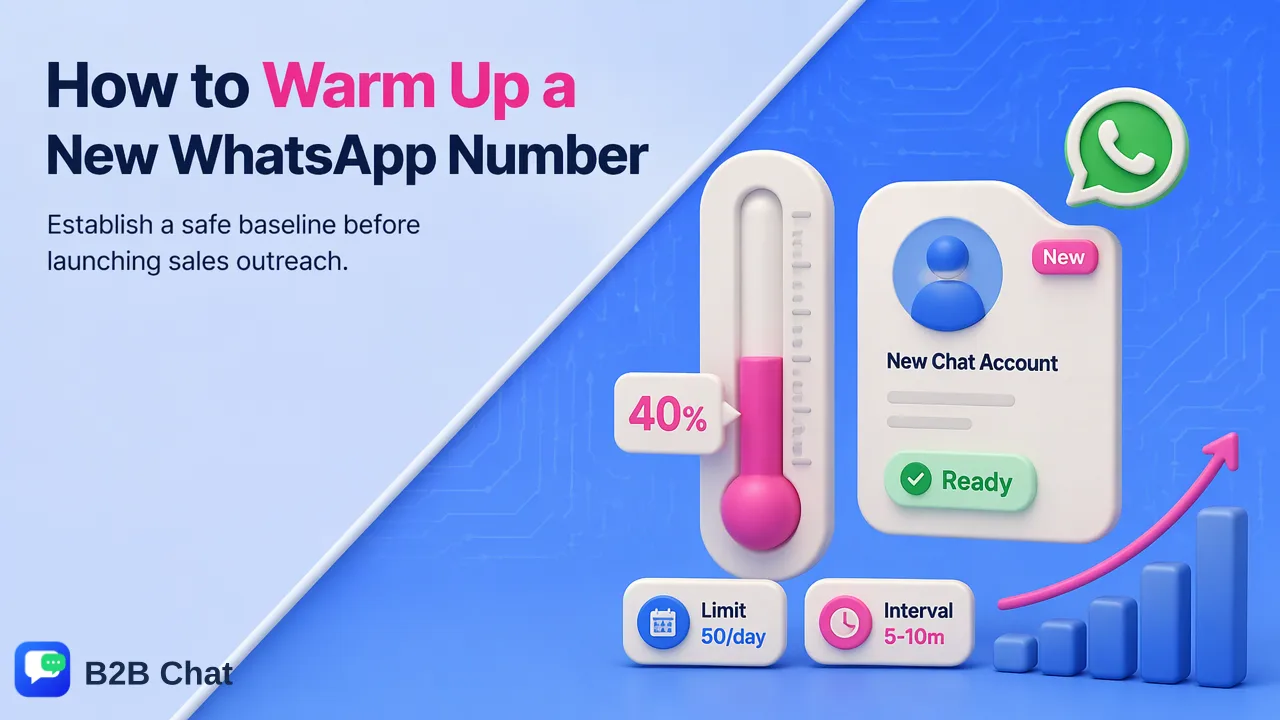
A practical guide detailing how cross-border sales teams can warm up a new WhatsApp account using gradual volume increases, randomized intervals, and CRM-based warm-up rules without violating platform policies.
A WhatsApp account warm-up is the process of gradually increasing messaging frequency and volume on a newly registered phone number over several days or weeks. Rather than launching outbound sales campaigns immediately, teams establish a baseline of normal communication by setting daily session caps, enforcing message limits, and using randomized action intervals. Managing these parameters through a CRM console helps maintain consistent pacing, though automated controls do not override platform terms or guarantee immunity from account restrictions.
The Purpose of a WhatsApp Account Warm-Up
Deploying a brand-new phone number directly into high-volume sales outreach presents operational risks. Messaging platforms monitor behavioral patterns on newly registered accounts. Sudden surges in outbound messaging from numbers lacking historical dialogue can trigger platform scrutiny.
A WhatsApp account warm-up builds an operational track record through controlled, low-volume communication. The primary objective is to simulate standard human messaging behavior before initiating formal sales outreach. When an account engages in steady, two-way exchanges over an extended period, it establishes a communication baseline. This disciplined rollout helps sales organizations pace their outreach and avoid abrupt activity spikes that resemble bulk distribution.
Configuring Warm-Up Policies and Limits
To execute a disciplined ramp-up, organizations should avoid ad-hoc manual messaging. Establishing clear rules inside a management workspace creates repeatable guardrails across outbound seats.
Key configuration parameters include:
- Daily Session Limits: Establish an upper threshold on how many distinct conversation sessions a single number can initiate each day.
- Message Caps: Restrict the total outbound messages sent per session and per day to prevent sudden volume spikes.
- Randomized Action Intervals: Introduce variable pauses between outbound actions rather than sending messages at fixed second-by-second timestamps.
Using a centralized workspace such as B2B Chat, teams can configure these warm-up policies directly within a dedicated CRM console. The platform pairs desktop messaging clients for Windows and macOS with web consoles that house warm-up rules, account management, and conversation controls, helping operators apply structured intervals systematically across numbers.
A Phased Schedule for Activity Scaling
Scaling activity requires a phased progression over several days. Teams should increase limits only when the account demonstrates consistent execution without operational friction.
| Phase | Primary Activity Focus | Volume Pacing Controls |
|---|---|---|
| Phase 1: Days 1–3 | Initial profile setup and internal two-way testing | Low daily message caps, long randomized intervals |
| Phase 2: Days 4–7 | Inbound inquiries and controlled contact exchanges | Moderate session caps, varied reply timing |
| Phase 3: Days 8–14 | Incremental outbound customer conversations | Expanded daily limits, active monitoring in CRM console |
| Phase 4: Day 15+ | Standard sales operations within team guidelines | Established daily limits, ongoing policy enforcement |
Throughout these phases, tracking activity inside the CRM console allows supervisors to review warm-up statistics, confirm that sessions adhere to defined caps, and detect irregular pacing early.
Compliance Boundaries and Platform Rules
While technical warm-up controls assist in pacing outbound activity, they do not make an account immune to restrictions or platform enforcement. Messaging platforms enforce strict anti-spam guidelines, recipient opt-in requirements, and abuse thresholds.
Organizations must recognize the boundary between pacing tools and policy compliance:
- No Ban Immunity: Automated pacing and gradual schedules do not guarantee ban avoidance on WhatsApp or sibling networks.
- Platform Policies Outrank Settings: Internal interval configurations do not override platform terms of service or user reporting mechanics.
- Quality of Engagement: Warm-up mechanics cannot compensate for unrequested outreach. True two-way engagement and relevant communication remain essential.
By leveraging structured CRM tools alongside policy-compliant outreach practices, teams can manage new sales numbers with greater operational consistency.
FAQ
How long should a WhatsApp account warm-up period last?
A standard warm-up schedule typically spans several days to a few weeks, depending on the intended sales volume. The process requires establishing a steady baseline through low-volume, two-way conversations before incrementally raising daily message caps and conversation sessions.
Can warm-up tools guarantee that an account will avoid bans?
No. Warm-up schedules and automated rules do not guarantee avoidance of messaging-platform bans, nor do they override platform rules. Pacing controls help teams avoid sudden spikes in activity, but accounts remain subject to WhatsApp policies, acceptable use terms, and recipient feedback.
What metrics should teams monitor during the warm-up phase?
Teams should track daily sent counts, conversation sessions, reply rates, and warm-up statistics recorded in their CRM console. Monitoring these numbers ensures that outbound activity stays within scheduled session limits and follows designated interval pacing.
Learn More
Choose the product information that fits the next step in your workflow.